
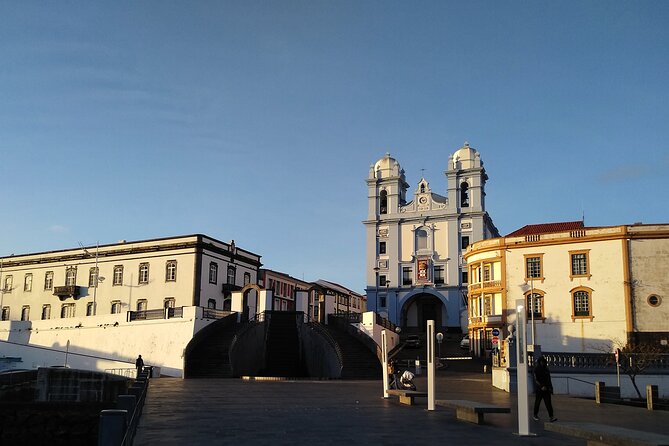
Reviewed · TERCEIRA TOURS
From Angra to Heroísmo step by step
Old water lines still guide your feet.
This 3-hour walking tour in Angra do Heroísmo on Terceira helps you understand how the Atlantic port city formed, using the path of the old Angra stream as the spine of the walk. I especially like the way the guide connects street-level details to big stories, and the fact that you get a geologist’s perspective on how water and stone shaped what people built. One thing to plan for: you will walk up and down cobblestone streets, so comfy shoes are not optional.
I like that the tour covers more than “pretty streets.” You’ll learn the urban and social evolution of Angra as well as the “secret” sides of kings tied to the city. Ricardo is one name that comes up in guides for this experience, and his style is praised for being passionate and strong on follow-up questions.
In This Review
- Key points you’ll care about
- Angra do Heroísmo: a 3-hour walk that reads like a city map
- Following the old Angra stream through cobblestone lanes
- Urban evolution you can actually picture, not just memorize
- The secret life of kings, and why power leaves traces
- Water supply stories that make the city make sense
- Walking pace, rest breaks, and what comfortable shoes should mean
- Language options, guide quality, and question-friendly history
- Price and value: why $41 can be a smart first-day spend
- Who this tour fits best on Terceira
- From booking to starting the walk: quick practical tips
- Should you book this walking tour?
- FAQ
- How long is the tour?
- Where does the tour take place?
- How much does it cost?
- What is included in the price?
- Are monument admission tickets included?
- What languages are available?
- What should I bring?
- Will there be walking on cobblestones?
- Can I reserve and pay later?
- Is there free cancellation?
Key points you’ll care about
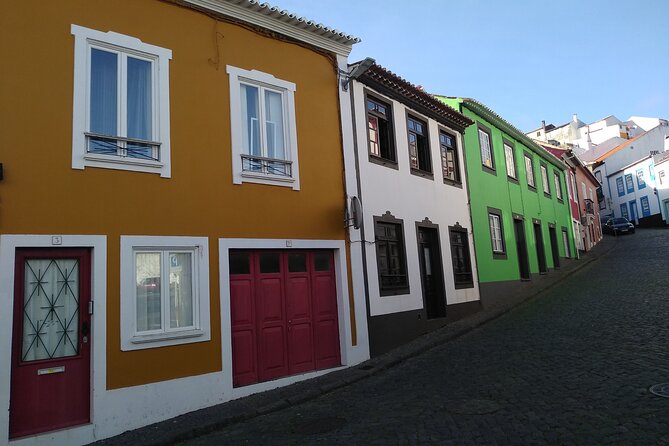
- The old Angra stream route turns the walk into a real-life lesson on how the city functioned.
- Urban evolution is explained in plain terms, not museum-style lecturing.
- Kings in Angra includes lesser-known power stories that make the city feel more human.
- Water supply details are a standout topic, and they help everything else click.
- A geologist’s lens makes the history feel physical, tied to stone and water.
Angra do Heroísmo: a 3-hour walk that reads like a city map

Angra do Heroísmo sits on Terceira in the Azores, and it has the kind of history that changes shape depending on who you ask. Sailors show up in one version. Pirates and generals show up in another. Then kings and princesses enter the conversation, and suddenly you understand why certain streets and patterns matter.
This tour is built for that “all at once” feeling, but it still stays manageable. It’s 3 hours long, and the pace is designed to be a mix of walking and resting, so you can keep your attention on stories instead of battling fatigue. If you’re new to Terceira, it’s a smart orientation. You end the tour with a clearer sense of where Angra’s importance came from, and why the city grew into an Atlantic commercial hub.
And yes, it’s a walking tour, not a ride. So if you want a view from a bus window, pick something else. If you want to understand the city by moving through it, this works.
More on Terceira:
- Azorean volcanic wine tour from Angra do Heroísmo
★ 5.0 · 29 reviews - Angra do Heroísmo: Panoramic city Tour
★ 5.0 · 20 reviews - Angra do Heroísmo On Foot – City Tour
★ 5.0 · 14 reviews - Angra do Heroísmo: Goat Islets Visit
★ 3.5 · 11 reviews
Following the old Angra stream through cobblestone lanes
The walk starts by using the old Angra stream as your guide. Instead of treating water as background, the tour frames it as a key character in the story. As you move through the streets, you’ll discover the path of the old watercourse and how it likely influenced daily life, where people could settle, and how the city organized itself.
This is more than an interesting fact. Water history gives you a method for reading cities. When you learn where water went, you start noticing why buildings and streets behave the way they do. The route also gives the tour a natural structure, so you’re not just absorbing random history bits.
You should expect cobblestones and some uneven steps. You’ll be walking up and down. That’s not a deal breaker, but it does mean you should wear shoes that won’t punish you by hour two. If your feet get sore easily, you’ll want to keep the pace easy during the steep bits and save your energy for the storytelling parts.
Urban evolution you can actually picture, not just memorize
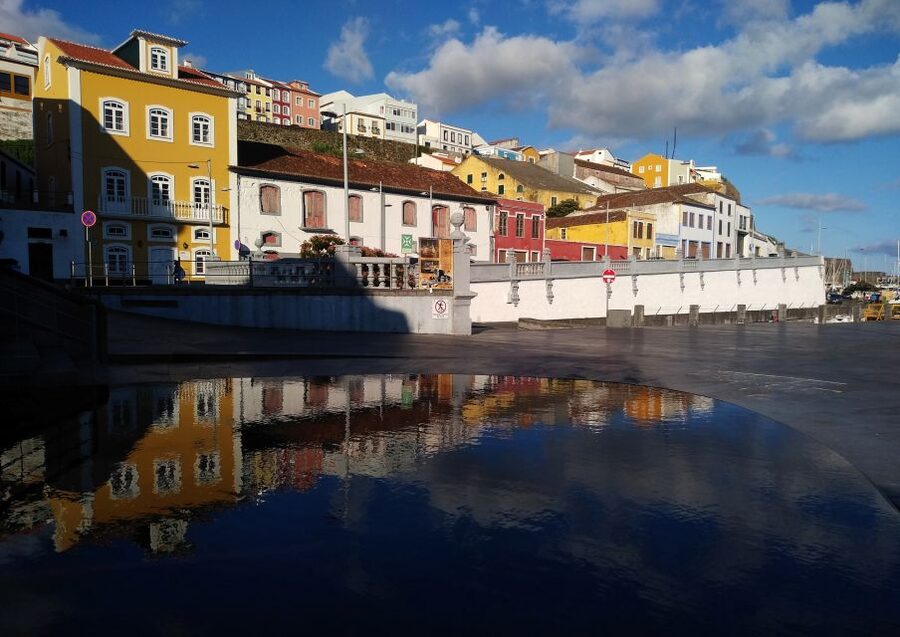
Angra didn’t stay the same shape for centuries. It changed with trade, power, and the constant push and pull of Atlantic life. This tour explains that urban evolution through the streets you’re standing on, with an interactive approach that feels closer to a conversation than a slideshow.
Here’s what I like about this approach: it reduces the usual “history overload” problem. Instead of asking you to memorize dates, it asks you to notice patterns. You’ll learn how the city grew and how social life likely shifted as Angra became more important for commerce and navigation.
This is where the guide’s background helps. The experience is described as coming from the perspective of a geologist passionate about history, and that matters. When someone can connect stone, water, and movement, the story becomes more grounded. You start thinking, not just listening.
The secret life of kings, and why power leaves traces
One of the listed highlights is learning about the secret life of Kings. That sounds dramatic, and the idea is simple: kings and royal figures influenced Angra in ways that are not always obvious if you only look at monuments. The tour pulls those power stories into street-level reality, so royalty stops being a name on a plaque.
You also learn how Angra’s history runs through major roles like sailors, pirates, generals, and royal families. The tour doesn’t treat these as separate eras. It shows how different kinds of people, each with their own agendas, shaped the city’s momentum. That can make the city feel less like a time capsule and more like a place that kept reinventing itself depending on who held influence.
A nice bonus is that this type of storytelling tends to stick. If a king’s connection to Angra is explained alongside the city’s layout and water logic, your brain keeps the link. You’re less likely to walk away with “cool facts” that vanish the next day.
Water supply stories that make the city make sense
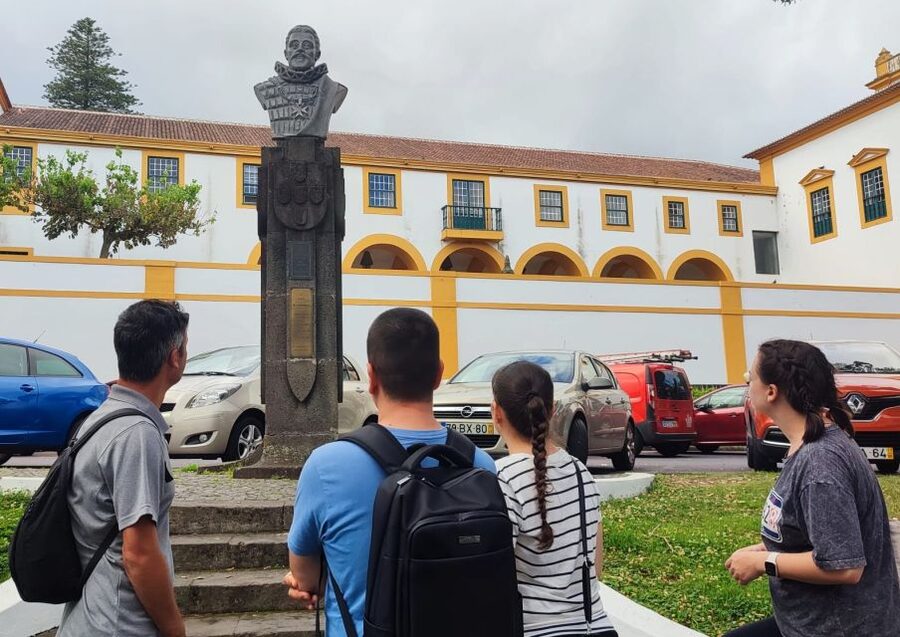
If you like history with practical grounding, the water supply material is a big reason to choose this tour. People specifically call out how interesting the explanation of Angra’s water supply is, and I can see why. Water is one of those topics that seems dry until someone shows how it shapes everything around it.
When you understand the water system, you start understanding the city’s priorities. Where can people live comfortably? How did the city support growth as it became a key Atlantic hub? Why do certain areas feel older or more function-oriented than others?
The tour’s format helps. You’re not staring at a single point and hoping it means something. You’re walking the city, learning the logic, then checking your mental map against what you see. That’s a real advantage on a first visit, when everything still feels like an unconnected puzzle.
Same stretch of Atlantic, a different sort of day:




Walking pace, rest breaks, and what comfortable shoes should mean
This experience is designed around 3 hours on cobblestones. That’s enough time to cover real ground and connect multiple themes, but it’s not so long you’ll be exhausted if you pace yourself.
From the way the tour is described and how it’s been reviewed, the walk includes moments to rest. That matters because it keeps you able to ask questions and actually process what you’re hearing. When a tour is nonstop, people tune out. When it has breathing room, you get more out of the guide’s explanations.
Still, you’ll want to be honest with yourself about footing. If you have ankle issues or you hate uneven stones, bring your most stable shoes and take your time on slopes. A walking tour is a workout disguised as a history lesson. Your calves will want credit.
Language options, guide quality, and question-friendly history
The tour runs with live guidance in Portuguese and English. That’s important if you want the story delivered clearly, not simplified to the point of feeling vague. A bilingual format also means you can stay connected to the guide’s pacing and style.
One specific guide name you may encounter is Ricardo. He’s praised for being technically solid, genuinely fascinated by the subject, and responsive to questions. That’s a big deal. A great tour doesn’t just tell a story. It builds in time for you to ask: Why here? How did that work? What changed over time?
Also, the guide format is simply tour guide included. You’re not buying a bundled show with fancy add-ons. You’re paying for interpretation, local context, and the ability to read the city without needing to do your own archaeology of information.
Price and value: why $41 can be a smart first-day spend
At about $41 per person for a 3-hour guided walking tour, this is priced as an entry-level “buy your bearings” activity. It’s not a bargain if you expect private attention, because it’s a standard group walking format. But it can still be excellent value because you get three kinds of payoff in one go:
- Orientation value: You leave with a mental map shaped by stream logic and city growth.
- Story payoff: Kings, sailors, pirates, and generals get tied into the city’s layout and function.
- Practical payoff: The water supply explanation gives you a tool to understand other parts of Angra later.
And because the tour is only 3 hours, you’re not risking a huge chunk of your day on a format you might not like. If you do the rest of your sightseeing afterward, you’ll feel smarter for it. That’s the real “value” in a tour like this.
One note: monument admission tickets are not included. So if you want to enter specific sites, plan to check what’s open and decide on tickets separately.
Who this tour fits best on Terceira
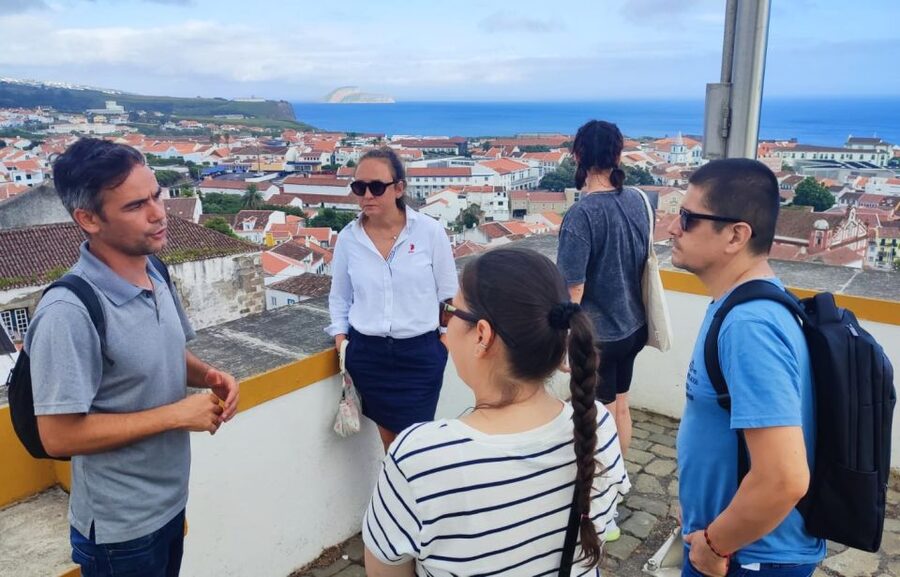
This is a strong pick if you want to see Angra in a way that feels coherent, not like you jumped between unrelated attractions. It’s especially good if:
- You’re there for the first time and want a quick orientation.
- You like history tied to real physical details, like water routes and city development.
- You enjoy asking questions and hearing follow-up answers.
It may be less ideal if you’re looking for lots of indoor time or you hate walking on cobblestones. It also may not satisfy you if you want a “sit and admire views” tour. This one is about interpretation at street level.
From booking to starting the walk: quick practical tips
Bring comfortable shoes with good grip. The tour includes up and down walking on cobblestones. If you’re sensitive to uneven ground, take your time on the stones.
Also think about your expectations. You’re not buying access to monuments. You’re buying a guide-led story that makes the city’s layout understandable. If you go in thinking, I’ll understand Angra better, you’ll likely get exactly that.
Should you book this walking tour?
Book it if you want a 3-hour history-and-city-logic lesson that you can reuse all week. The focus on the old Angra stream, the explanation of the city’s water supply, and the attention to kings and power stories make it feel more specific than a generic “old town” walk. Reviews highlight how engaging the guidance can be, and the mix of walking and resting helps you actually absorb it.
Skip it if your priority is purely scenic stops with minimal walking, or if cobblestones are a hard no for your feet. Also, if you’re hoping everything will include monument entry, remember tickets are not included.
If you’re on Terceira and want Angra to finally click, this is a solid choice.
FAQ
How long is the tour?
The duration is 3 hours.
Where does the tour take place?
It takes place in Azores, Portugal, in the city of Angra do Heroísmo on the island of Terceira.
How much does it cost?
The price is listed as $41 per person.
What is included in the price?
A tour guide is included.
Are monument admission tickets included?
No, monument admission tickets are not included.
What languages are available?
The live tour guide is available in Portuguese and English.
What should I bring?
Bring comfortable shoes.
Will there be walking on cobblestones?
Yes. The tour includes walking up and down through cobblestone streets.
Can I reserve and pay later?
Yes. You can reserve now and pay later.
Is there free cancellation?
Yes. You can cancel up to 24 hours in advance for a full refund.
Just in from around Angra Do Heroismo
- Walking tour of Angra do Heroísmo★ 5.0 · 1 review
- Angra do Heroísmo Half Day Walking City Tour with Tasting★ 5.0 · 1 review
- Half Day – Angra do Heroísmo Walking Tour with Tasting★ 5.0 · 3 reviews
- Angra do Heroísmo: A walking tour of the city★ 5.0 · 3 reviews
- Angra do Heroísmo Walking City Tour: Half Day Tour★ 3.5 · 3 reviews
- Angra do Heroísmo by foot★ 5.0 · 4 reviews
Terceira Tours, compared.


Watching whales and dolphins on Terceira Island
Read our review →
Underground Van Tour (Half Day) | Terceira Island
Read our review →
Browse the lists this tour appears in