
Reviewed · PINEAPPLE PLANTATION TOURS
Ponta Delgada: City Tour and Pineapple Plantation Visit
Pineapples and old town, in one ride. I like the way a Lagarta tour strings together Ponta Delgada highlights like Campo de São Francisco and Portas da Cidade, then sends you toward São Miguel’s greenhouse pineapple story. It’s a simple plan if you want culture and flavor, without spending half your day getting from place to place.
I also like that it’s a tight 50-minute circuit with a live guide in English or Portuguese, plus an audio guide in EN and PT. The one thing to consider is that you will walk a bit, including during the plantation visit, so comfortable shoes matter.
In This Review
- Key points
- How This 50-Minute Lagarta Tour Fits Into a Day in Ponta Delgada
- Campo de São Francisco and Portas da Cidade: Your First Big Photo Stops, With Context
- Mercado da Graça: A Market Stop That Helps You Read the City
- Pineapple Plantation Time: Why Greenhouses Matter on São Miguel
- How the Tour Explains Pineapple Growing, and Where a Taste Fits
- Practical Tips for Comfort, Photos, and Train Limits
- Price and Value: What $11 Gets You, and What It Does Not
- Should You Book This Lagarta Tour and Pineapple Plantation Visit?
Key points
- Lagarta Kiosk start and end keeps the timing easy to manage, and the tour runs for about 50 minutes
- Campo de São Francisco and Portas da Cidade give you quick, recognizable city anchors
- Mercado da Graça is where everyday island life shows up, not just photos
- Greenhouse pineapple visit on São Miguel explains how Azorean pineapple is grown
- A small-cost pineapple taste may be available, and it’s a great reward for paying attention
- The only hop-off point is on the plantation, so plan for staying with the group
How This 50-Minute Lagarta Tour Fits Into a Day in Ponta Delgada
This is one of those tours that works because it does not try to do everything. You get a guided loop through central Ponta Delgada, then you shift gears to pineapple farming in greenhouses. The timing is short enough that it won’t squeeze your whole afternoon, but long enough that you actually learn something beyond seeing a few buildings.
If your base is on São Miguel, Ponta Delgada is where you likely want to get your bearings fast. The Lagarta format helps. You’re moving between stops, instead of walking the whole time, and you still cover the names you’ll hear again and again once you start exploring on your own.
Here’s the real appeal for me: you get a clear connection between city life and what grows around it. Ponta Delgada is not just scenery, it’s routines, markets, and locals buying what they need. Then the tour hands you a different kind of routine, the careful work behind pineapple cultivation in greenhouse conditions. That change of pace makes the experience feel complete for such a compact schedule.
More pineapple houses to walk through:
- Ponta Delgada: Pineapple wine tasting and pineapple tour
★ 4.8 · 127 reviews - Ponta Delgada: Greenhouse Hot Tube with Pineapple Tour
★ 4.4 · 76 reviews - Sete Cidades and Pineapple Plantation Half Day Private Tour
★ 5.0 · 25 reviews - Hot Water Pool Bath Inside Pineapple Plantation & Dinner
★ 5.0 · 24 reviews
Campo de São Francisco and Portas da Cidade: Your First Big Photo Stops, With Context
The tour starts and ends at Lagarta Kiosk, which is helpful if you’re building a day plan. Instead of hunting for a meeting point across town, you can anchor the timing there and then stay focused on the sightseeing.
Your first landmark stop is Campo de São Francisco, one of the most iconic public spaces in Ponta Delgada. The value here is not the name alone. A guided stop means you hear what to notice while you’re there, how the place fits into the city, and what kind of atmosphere it has. Think of it as your orientation station. Once you see the square and understand what it represents, you’ll find it easier to connect the rest of the city in your head.
Next comes Portas da Cidade, the symbolic city gates. This is a great moment for travelers who like history but do not want a long lecture. The gate concept is simple: it’s a visual reminder that the city had entrances, limits, and flow, even long before you arrived with a map in your pocket. On a short tour, that kind of framing is gold.
One more practical note: because this is a guided loop, the pace is friendly if you are short on energy. You’re not speed-walking across town, and you’re not stuck at one stop too long.
Mercado da Graça: A Market Stop That Helps You Read the City
After the “spot the landmark” moments, the tour shifts into something more day-to-day at Mercado da Graça. This is where the experience gets more human. Markets tell you what people are buying and what local life looks like on a typical day, and you don’t need special knowledge to sense the rhythm of the place.
I like this kind of stop because it gives your trip a layer that photographs cannot. Even if you do not plan to shop heavily, you can watch, look, and ask yourself a simple question: what would you actually want to eat or cook with here? That mental exercise usually makes your later meal decisions in Ponta Delgada easier, and it helps you avoid eating only what’s convenient near tourist hotspots.
Since the tour includes a live guide in Portuguese and English, you can also get quick explanations on what you’re seeing. And if your language comfort is limited, the included audio guide in EN and PT gives you another way to follow along.
For me, Mercado da Graça is the stop that turns the tour from a set of sights into a sense of place.
Pineapple Plantation Time: Why Greenhouses Matter on São Miguel
Then comes the second half of the tour, the part most visitors remember. You move from city landmarks to a pineapple plantation with greenhouses, where Azorean pineapple is grown as a proud emblem of São Miguel.
Greenhouses are important because they explain why this fruit is not just a random island crop. You’re seeing a controlled environment, which hints at the planning and care required for consistent cultivation. When you’re in a city, it’s easy to assume food just appears. This visit makes the process visible, and that changes the way you think about the fruit when you later see it in shops or restaurants.
This section also tends to work well for people who like hands-on learning but do not want a long farm trip. The tour stays focused on the core story: how the pineapple is cultivated, what makes it part of island identity, and what it takes to grow it successfully in greenhouse conditions.
The experience is also set up with a clear route and timing. The only hop-off point is on the pineapple plantations, so you are not bouncing back and forth or getting distracted wandering off. You follow the plan, and you get the full arc from city to crop.
How the Tour Explains Pineapple Growing, and Where a Taste Fits
You’ll get guided time inside the plantation area, including greenhouse visits. The tour is designed to show you the cultivation process and to put the fruit into context, with stories and explanations about pineapple growing on the islands.
This is where I pay attention to tone. A good guide does not overwhelm you with farming jargon. Based on the kind of comments people have shared after joining, the pineapple portion is usually the moment where the guide’s clarity really lands, especially when it comes to how greenhouse cultivation works in practice.
One of the best rewards for the attention span of a short tour is the fruit itself. There may be an opportunity to try Azorean pineapple for a small additional cost, and it’s a nice way to connect what you see in the greenhouse with what you taste later. Even if you are not sure you’ll be a pineapple person, the idea here is not to force you into buying fruit. It’s to make the growing story real.
If you’re the kind of traveler who loves food but hates wasting time, this is a strong format: you learn the story fast, then you get a chance to taste the payoff.
More on São Miguel:



Practical Tips for Comfort, Photos, and Train Limits
This tour mixes train time with walking, so dress for movement. Comfortable shoes are recommended, and I’d treat this as a “wear something you can stand in” situation, not a fancy outfit stop. The plantation part includes greenhouse areas, which usually means you may be on pathways that are not meant for slippery soles.
The train itself has limits you should know about. There are no ramps on the train, and there are no seat belts. That doesn’t mean you cannot do it, but it does mean you should be realistic about how you feel in small transit rides. If you need extra assistance getting on and off, or if you prefer a more fixed seating setup, plan accordingly.
Also note the hop-off rule. The only hop-off point is on the pineapple plantations. If you were hoping to pop off in town to grab a snack and then rejoin later, this tour is not built for that. It’s designed as a single continuous route.
Finally, think about photos in advance. Food and drinks are not included, and personal expenses are on you. If you want photos, bring whatever you normally use, and keep your hands free for the walking segments.
Price and Value: What $11 Gets You, and What It Does Not
At about $11 per person for roughly 50 minutes, the value here is all about focus. You are paying for a guided, timed mix of city landmarks and one specific learning target: pineapple cultivation in greenhouse conditions.
What makes it feel like good value is the breadth packed into a short window. Many city tours are long and exhausting, or they are short but superficial. This one gives you the names you want in central Ponta Delgada, plus a farm story that explains an island product you’ll likely encounter while you eat around town.
What it does not promise is a full day experience. You won’t come away from the pineapple greenhouse with an academic understanding of all cultivation methods. You won’t browse the market for a long time or shop like you’re on a mission. This is a “get a lot in a little time” tour.
So I see it as a best-fit choice if:
- You want a quick introduction to Ponta Delgada’s main sights
- You like learning about food, not just tasting it
- You are short on time but still want something guided
- You prefer less walking than a purely on-foot town tour
If you crave long museum-level explanations or hours of free time in one place, you might feel rushed. But if your goal is smart coverage and a memorable local product story, this price-to-time ratio makes sense.
Should You Book This Lagarta Tour and Pineapple Plantation Visit?
Book it if you want a short, guided way to see key Ponta Delgada landmarks and connect them to a real São Miguel product. It’s especially worth booking if you like having someone explain what you’re looking at, and you appreciate the payoff of a pineapple taste after learning how it’s grown in greenhouses.
Skip it or choose something else if walking will be a problem for you, or if the lack of train ramps and seat belts is a dealbreaker. Also, if you strongly prefer to get off multiple times and wander at your own speed, this tour is too structured for that.
Overall, I’d call this a practical, good-value add-on when your day needs both city orientation and a local food story, without turning your schedule into a marathon.
Just in from around Ponta Delgada Sao Miguel
- São Miguel Azores: Kayak Rental with Electric Pump & Paddles★ 5.0 · 1 review
- Half Day Sete Cidades – Perfect Tour for Cruise Passengers★ 5.0 · 1 review
- Wine Tasting & Guided City Tour in Ponta Delgada (DE/EN/PT)★ 5.0 · 1 review
- Lagoa do Fogo: Whales & Volcano Geo Tour w/ Biologist +lunch★ 5.0 · 1 review
- Traditions & Flavors of São Miguel★ 5.0 · 1 review
- Azores: Surfing Lessons for All Levels★ 5.0 · 2 reviews
Pineapple Plantation Tours, compared.

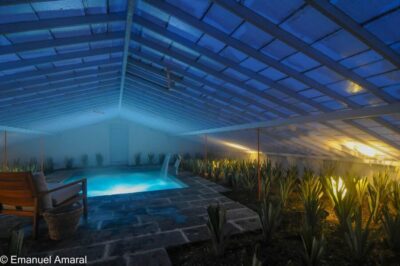

Sete Cidades and Pineapple Plantation Half Day Private Tour
Read our review →
Hot Water Pool Bath Inside Pineapple Plantation & Dinner
Read our review →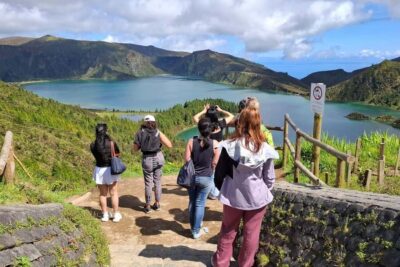
Sete Cidades & Fire Lake: Full-Day Tour with Pineapple plant
Read our review →
Browse the lists this tour appears in