Reviewed · TOURS
São Miguel: Azores Whaling & Lookout Legacy Tour
Whales and history meet at the lookout.
This 3-hour São Miguel tour mixes whaling culture with hands-on whale-spotting practice from an old guard post, plus a guided visit to the 1957 Ponta Garça Lighthouse. It starts at the Marina of Vila Franca do Campo, then moves through real, sea-tested relics and techniques that shaped modern Azorean whale watching.
I especially love how the tour anchors you in objects you can actually see, like the 1945 whaleboat Senhora de Fátima, still treated as an operational piece of maritime heritage. I also like the practical science angle, because you get to use long-range binoculars from the Vigia da Furada lookout instead of just hearing stories from a bus window.
One drawback to plan around: this is a weather-dependent experience, and temperatures can shift fast. Bring your own water, sunscreen, and warm layers, or you will feel it after a couple hours outside.
In This Review
- Key Things I’d Prioritize on This Tour
- Arrive at Vila Franca do Campo, Then Get the Ocean Context Fast
- Stepping Onto the 1945 Whaleboat, Senhora de Fátima
- The Van Ride to Vigia da Furada, Where Observation Was the Job
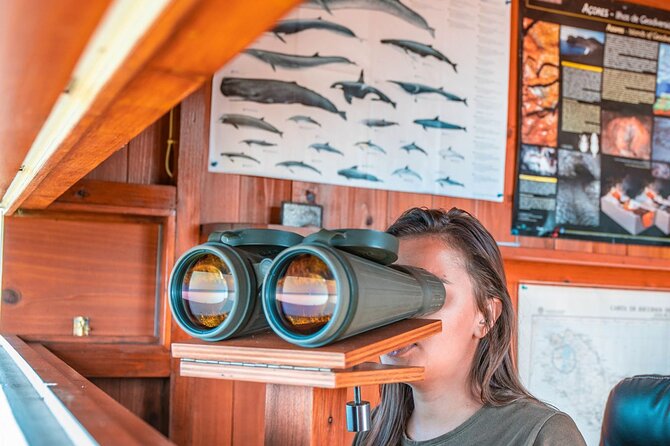
- Practicing the Lookout Role With Long-Range Binoculars
- Ponta Garça Lighthouse (1957): A Keeper-Led Walk With Maritime Life Details
- Timing, Comfort, and What to Bring for a Swingy, Sun-Wind Day
- Price and Value: Why About $46.86 Can Feel Fair Here
- Who This Tour Suits Best in São Miguel
- Should You Book the São Miguel Whaling and Lookout Legacy Tour?
- FAQ
- Where does the tour start?
- What time does it run?
- Is hotel pickup available?
- What language is the tour in?
- What should I bring?
- How big is the group?
- What’s included in the price?
Key Things I’d Prioritize on This Tour
- Senhora de Fátima (1945): a rare, fully operational whaleboat that connects you to the day-to-day realities of whaling-era work.
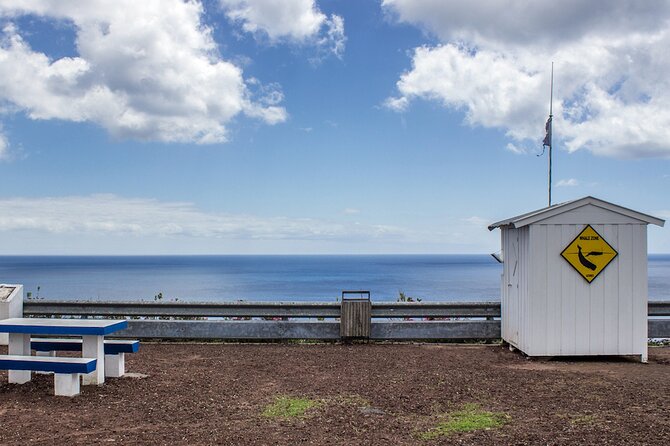
- Vigia da Furada: the lookout where you learn old whale-spotting methods and practice the role yourself.
- 1830 spotting techniques: you do not just get history, you learn how people used observation skills before modern tools.
- Ponta Garça Lighthouse (1957): a keeper-guided walk focused on navigation, maritime life, and sea views.
- Small group size (max 7): more questions, less crowding, and a better chance to actually pay attention.
- Air-conditioned van transfer: you get viewpoints without turning the whole tour into an endurance test.
Arrive at Vila Franca do Campo, Then Get the Ocean Context Fast
Check-in happens at the Marina de Vila Franca do Campo. The meeting address is Marina de Vila Franca do Campo 4, 9680-187 Vila Franca do Campo, Portugal, and the tour starts at 1:15 pm. If you’re using pickup, it’s based on availability, and the pickup time begins before the official start, so keep your phone ready and plan to be flexible.
Before you hop into the day’s scenery, you get a short briefing and presentation about local whaling culture. This matters, because it sets the tone: the Azores are not doing a museum reenactment. You’re learning how people worked with the sea, how they observed it, and why those skills evolved into what you do today when you go searching for whales.
This early orientation also helps you read what you’ll see later. When you understand the purpose of the lookout and the whaleboat, the places stop feeling like random stops on a map and start feeling like a system.
More on São Miguel:
- From Ponta Delgada: Whale and Dolphin Watching Trip
★ 4.7 · 4,109 reviews - Azores: Whale Watching & Islet Boat Tour w/ Marine Biologist
★ 4.7 · 2,945 reviews - São Miguel West: Full-Day Van Tour with Lunch
★ 4.9 · 1,948 reviews - São Miguel West Full Day Tour with Setes Cidades Including Lunch
★ 5.0 · 1,605 reviews
Stepping Onto the 1945 Whaleboat, Senhora de Fátima
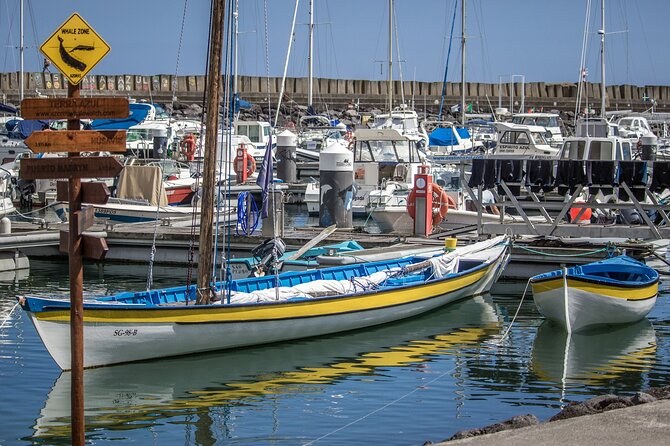
The first big anchor point is a visit to the 1945 whaleboat Senhora de Fátima. The key detail here is not just age. This is described as the single fully operational and sea-worthy evidence of the whaling era in São Miguel, meaning it is not treated like a dead display behind glass.
That changes how you experience it. A whaleboat is not art. It’s a working tool, shaped by real needs: seaworthiness, handling, and the practical reality of getting out there and bringing back what a community depended on.
Your guide’s job in this section is to connect the boat to the wider story: how whaling in the Azores functioned, why observation and preparation mattered, and how maritime work created local expertise. Expect this part to feel hands-on and grounded. You’ll likely come away thinking more about daily operations, not just big dramatic moments.
The Van Ride to Vigia da Furada, Where Observation Was the Job
After the whaleboat stop, you ride by van to the whaler lookout, Vigia da Furada. The transfer is in an air-conditioned van, which is a genuinely good detail in São Miguel, where weather can swing and sun can still feel sharp.
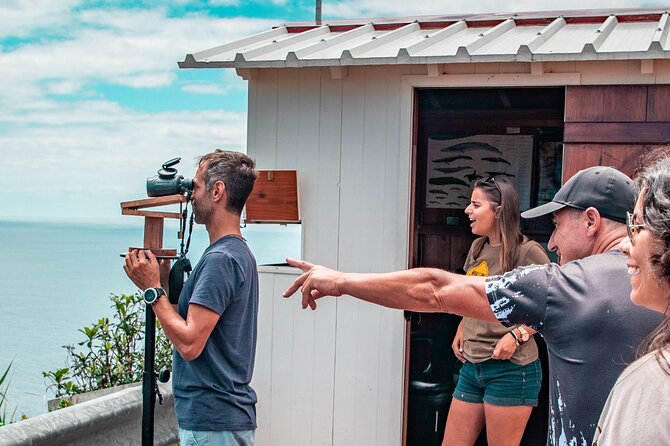
At Vigia da Furada, you learn ancient 1830 whale spotting techniques. This is where the tour earns its name. Instead of only explaining the past, it walks you through the thinking process behind lookout work.
The goal is to show you how whale spotting evolved into Azorean whale watching. That evolution makes sense here because the lookout is not a random viewpoint. It is a purpose-built position, meant for long-range observation, patient scanning, and pattern recognition.
If you like practical learning, you’ll appreciate how your guide ties the technique to what you’ll do next.
Practicing the Lookout Role With Long-Range Binoculars
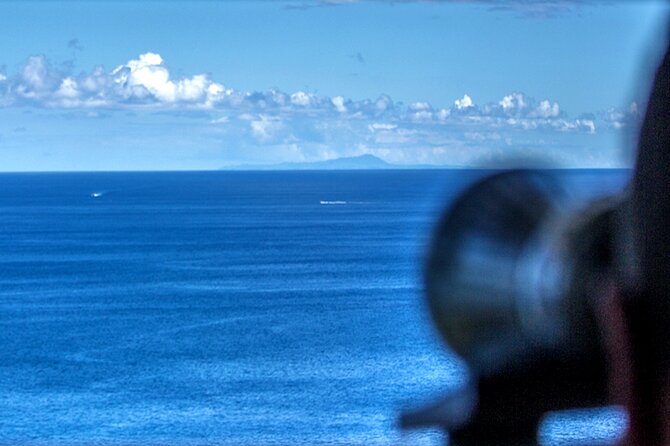
Once you’re at the lookout, you get to experience searching for whales yourself using specialized long-range binoculars. This is one of the tour’s most compelling parts because you get out of passive mode.
Here’s how to make this section work for you:
- Give your eyes a minute to adjust, then scan slowly. Quick pan scanning usually means you miss subtle surfacing.
- Look for signs, not just bodies. A small spout or a brief surface change can be the first clue.
- Take turns and communicate with your group, even if your role is mostly solo. One person might notice something another missed.
If you’ve ever tried to film while also paying attention, you know how fast it turns into a distraction. A tip from other experiences with this crew is to put your phone down when it counts. It’s not about being strict. It’s about staying present long enough to see what the lookout was built for.
Also, bring your camera. The tour description calls it essential, especially for photography lovers. From this kind of elevation, you can also capture the coastline and ocean that made the lookout practical in the first place.
Ponta Garça Lighthouse (1957): A Keeper-Led Walk With Maritime Life Details
Then you head to Ponta Garça’s 1957 Lighthouse. This part is guided by the lighthouse keeper, and you’ll get interesting facts about the building and why it mattered to maritime activity and sea men.
Why do I like this stop? Because it adds another layer to the same ocean theme without repeating it. Whaling was about searching, judging, and acting. The lighthouse is about navigation, warning, and staying useful when visibility matters.
As you walk through the keeper-led tour, you’re likely to come away with a better sense of how the sea connected communities across the island. It’s not only about whales. It’s about the broader coastal knowledge system: routes, hazards, signals, and the people who made seafaring possible.
And yes, you’ll also get views. This is one of those places where the scenery feels like part of the lesson, not an afterthought.
Same stretch of Atlantic, a different sort of day:
Timing, Comfort, and What to Bring for a Swingy, Sun-Wind Day
This is a 3-hour tour (approx.), and it runs with a tight flow: marina check-in, briefing, whaleboat visit, van transfer to the lookout, lookout role with binoculars, lighthouse keeper tour, then back to the meeting point.
Group size is capped at 7 travelers, which you’ll feel in practice. Smaller groups move better, and you’re more likely to get your questions answered instead of watching a guide sprint through facts.
Bring:
- Your personal water supply. Water is not included.
- Sunscreen and chap-stick for sun and wind.
- Warm clothing, because temperatures can vary.
- An eat light approach. Light food is permitted.
- A camera, especially for photography.
One more comfort note: wear something you can stand and look from easily. The payoff depends on your willingness to slow down and scan the horizon.
Price and Value: Why About $46.86 Can Feel Fair Here
At $46.86 per person, this tour is priced like an experience, not a vague sightseeing add-on. And the value comes from what’s included, not just the number.
You get:
- A local whaling history session
- A guided van tour and whaler lookout tour
- A lighthouse keeper tour
- Insurance
- A guide who ties it all together
The biggest value driver is the combination of three different learning modes:
1) an actual sea-worthy artifact (Senhora de Fátima),
2) a working style of observation (lookout role with binoculars),
3) maritime meaning in the landscape (keeper-led lighthouse visit).
If you only wanted scenery, you could do it on your own. But if you want context and hands-on practice, this price starts to look reasonable fast.
Also, small groups matter. For $46.86, you’re not paying extra for a crowded bus. You’re paying for time and attention.
Who This Tour Suits Best in São Miguel
I’d book this if you:
- Want something more specific than generic whale watching
- Like history that is tied to tools, work, and observation
- Prefer smaller groups
- Enjoy science-adjacent learning, where skills matter
It also fits couples, solo travelers, and anyone who likes being outside without committing to a full day. The tour says most travelers can participate, and service animals are allowed.
If you’re traveling with kids, it could be a strong match if they can handle lookout time without constant entertainment. The payoff is educational and tactile, not just lecture-based.
Should You Book the São Miguel Whaling and Lookout Legacy Tour?
Yes, if your ideal São Miguel day includes more than beaches and viewpoints. This tour gives you a structured way to understand how whaling-era observation evolved into modern whale watching, and you actually get to practice the lookout role with specialized long-range binoculars.
The main reason to hesitate is simple: weather. Since the tour depends on good conditions, you’ll want flexibility. Also, don’t show up without your water and sun protection, because you’ll be outside enough for it to matter.
If you love practical learning, real maritime objects, and seeing how a place functions, this is a smart use of a half-day. You’ll leave with a clearer mental map of the ocean and the people who read it for a living.
FAQ
Where does the tour start?
The tour meets at the Marina de Vila Franca do Campo, at Marina de Vila Franca do Campo 4, 9680-187 Vila Franca Do Campo, Portugal.
What time does it run?
The start time is 1:15 pm, and the tour lasts about 3 hours. The activity ends back at the meeting point.
Is hotel pickup available?
Hotel pickups are subject to availability and usually begin prior to the designated tour time. You’ll need to contact the provider to book and confirm your exact pickup time.
What language is the tour in?
English is the official language. The team is multinational and may accommodate other preferred languages, but this is not guaranteed.
What should I bring?
Bring your own water, sunscreen, chap-stick, and warm clothing since temperatures may vary. Eat light, and consider bringing a camera, especially if you enjoy photography.
How big is the group?
The tour has a maximum of 7 travelers, which helps keep the experience more personal.
What’s included in the price?
The tour includes the local whaling history session, guided van and whaler lookout tour, lighthouse keeper tour, insurance, and a guide.
Just in from around Sao Miguel
- São Miguel Island: Nordeste Natural Park & Waterfalls★ 5.0 · 1 review
- São Miguel Guided Tour to the Lagoa do Fogo Volcano and Sete Cidades, Azores★ 5.0 · 1 review
- Private Transfer from Azores (PDL) Airport to Lagoa★ 5.0 · 1 review
- From Ponta Delgada: Nordeste Full Day Jeep Tour★ 5.0 · 1 review
- Private Transfer from Azores (PDL) Airport to Vila Franca do Campo★ 5.0 · 1 review
- São Miguel Azores: Kayak Rental with Electric Pump & Paddles★ 5.0 · 1 review
Tours, compared.
Whale Watching & Islet Boat Tour w/ Marine Biologist
Read our review →
São Miguel West: Full-Day Van Tour with Lunch
Read our review →
São Miguel West Full Day Tour with Setes Cidades Including Lunch
Read our review →
São Miguel East: Full-Day Van Tour with Lunch
Read our review →
São Miguel East Van Tour with Lunch: Furnas & Nordeste
Read our review →