
Reviewed · PRIVATE
ARCHEOLOGY TOUR (Full Day Private Tour)
Stone tools in an Azores walk.
This private archaeology tour takes you into Terceira’s pre-colonial world, using real sites, real evidence, and an on-the-spot storyteller in Juca. I love the way the day mixes hands-on archaeology with stress-free pickup and drop-off from your Angra do Heroísmo address.
You get a full guided day (about 6 to 9 hours) with time to move at a human pace, plus a guide who is also set up to capture the day with a camera. The route is built around small hikes and places you might not find on your own.
One possible consideration: this is not a sit-everywhere tour. You should expect moderate physical effort, muddy ground in wet weather, and some stops that include uneven paths and climbing over walls.
In This Review
- Key Highlights You Should Know Before You Go
- Terceira’s Pre-Colonial Archaeology With Real Field Logic
- Pickup From Angra do Heroísmo, Without the Hunt
- The Value Beat: What You Pay For on This Private Day
- Entering the Azores Expeditions Stop and Getting Oriented
- Complexo Megalítico da Grota do Medo, Where the Stones Do the Teaching
- Columbarium Romano and the Jump From One Era to Another
- Passagem das bestas (Relheiras do Cabrito) and Cars Ruts Logic
- The Other Stops That Shape the Full Day
- Walking Notes: Small Hikes, Uneven Ground, and Weather
- Food and Timing: Why Meals Matter on a 6 to 9 Hour Day
- Why the Guide Style Feels Different: Evidence, Humility, and Questions
- Who This Tour Fits Best
- Quick Price Reality Check: When It Feels Like a Bargain
- Should You Book the Full Day Private Archaeology Tour?
- FAQ
- How long is the full day private archaeology tour?
- What time does the tour start and where do pickups happen?
- Are tickets included for the main stop?
- What is included in the tour price?
- What is not included?
- Is the tour private, and do children need to be with an adult?
Key Highlights You Should Know Before You Go
- Juca as guide and storyteller: an archaeologist and geologist who works with the university, and who explains what is known versus what is still debated.
- Grota do Medo Complex: a major megalithic site experience, not just a quick photo stop.
- Roman columbarium and cars ruts: you’ll connect later historical layers to older rock features like Passagem das bestas (Relheiras do Cabrito).
- Access and pacing: you go to places that can be hard to reach without local know-how, and the day is paced for your group.
- Photo-friendly guide approach: you’ll get help getting good shots as you travel between sites.
- Private transfers: pickup and drop-off are handled for your address, which keeps the day from feeling like logistics homework.
Terceira’s Pre-Colonial Archaeology With Real Field Logic
Terceira can feel like a friendly island breakaway, then suddenly you’re walking through evidence of long-ago lives. That is the hook of this day: instead of learning archaeology only from posters, you visit sites in place, where the rocks, soil, and structures do most of the talking.
I like that the guide doesn’t force you into one single story. The best moments are when you’re shown the reasoning behind an interpretation, like how certain features line up with water collection, ritual areas, stone shelters, or mortuary-style places. When uncertainty exists, it is treated as uncertainty, not as a sales pitch.
And because it’s private, you can ask questions without timing your curiosity to match a bus schedule. If you want more explanation on why a site looks the way it does, you can usually steer the conversation.
More on Terceira:
- Azorean volcanic wine tour from Angra do Heroísmo
★ 5.0 · 29 reviews - Angra do Heroísmo: Panoramic city Tour
★ 5.0 · 20 reviews - Angra do Heroísmo On Foot – City Tour
★ 5.0 · 14 reviews - Angra do Heroísmo: Goat Islets Visit
★ 3.5 · 11 reviews
Pickup From Angra do Heroísmo, Without the Hunt
This tour is built around pickup and drop-off, which matters more than you’d think. If you are staying in Angra do Heroísmo, the start time is 9:00 am, and having transport handled takes away the pressure of getting to the meeting point with parking, directions, and timing.
Practical note: you’ll need to provide the exact pickup details. Hotels just need the name. For local accommodations, you’ll be asked to send a Google link. If you’re coming from the airport, the operator needs your flight number and arrival time so they can match the transfer.
Also, the tour is private, so you are not squeezed into someone else’s plan. That flexibility helps when weather rolls in or when a stop requires extra time because the ground is slippery.
The Value Beat: What You Pay For on This Private Day
At $242.17 per person, this is not a budget impulse buy. The value comes from three practical things working together.
First, you are paying for private guiding and private transport in an air-conditioned minivan. You’re not just booking a lecture, you’re booking a moving day with someone who knows where to go and how to read what you see.
Second, at the main start stop, the admission ticket is included for about 20 minutes. That helps cover the entry part of the day, so you start with fewer small extra charges.
Third, you get a professional photographer guide setup. Even if you do not care about photos, it often means you stop when the light is good and you move in a way that makes sightseeing easier.
If you are the type who wants a big checklist and a stamp collecting day, you might feel the price is high. If you want a slower, more meaningful day with interpretation and context, the cost tends to feel more fair.
Entering the Azores Expeditions Stop and Getting Oriented
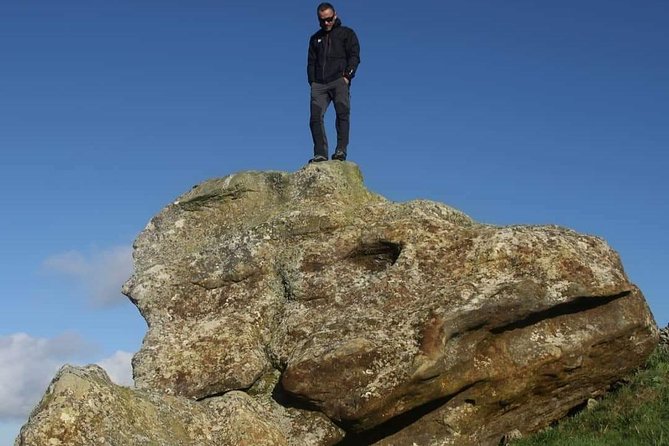
The day starts at Azores Expeditions, where you spend about 20 minutes with an included admission ticket. This is the moment that sets the tone. You’ll see the main archaeological complex you’re going to explore, and you get enough context to stop treating it like random piles of stone.
Think of it as getting your bearings fast, so your later walk makes more sense. Instead of staring at rocks and hoping you guess the purpose, you get the vocabulary to notice features like planned stone structures, specific rock shapes, and how later historical use can sit near older traces.
Even if you only have a little archaeology background, this orientation tends to make the day click. The guide style here is story plus evidence, not story plus vibes.
Complexo Megalítico da Grota do Medo, Where the Stones Do the Teaching
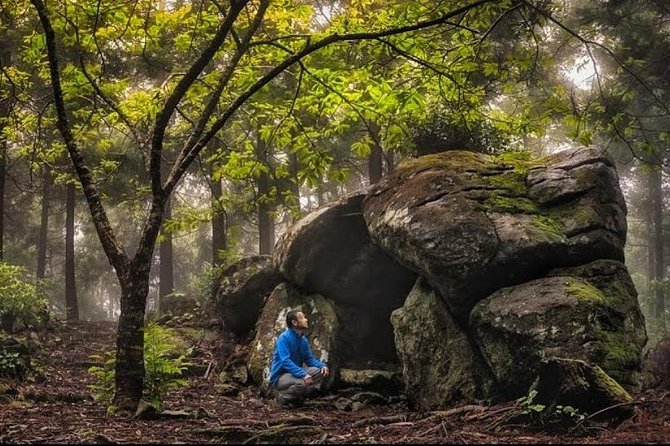
Grota do Medo, or the Complexo Megalítico da Grota do Medo, is the core site of the day. It is built for understanding change over time, because megalithic places usually do not stay in one use forever.
What you should look for is how the site feels arranged rather than accidental. The guide will point out elements tied to human decisions, like stone shelters, ceremonial space possibilities, or how people might have moved through the area. The best part is that you are not just looking at a museum-style exhibit. You’re standing in the setting that shaped how those people lived.
I also like that you get a sense of how interpretation is handled. One of the most respected approaches in good archaeology is acknowledging what is firm and what is a hypothesis. On this tour, the explanations aim for transparency, so you can form your own conclusions instead of being pushed toward one single conclusion.
More Angra do Heroismo days out from morning on:
Columbarium Romano and the Jump From One Era to Another
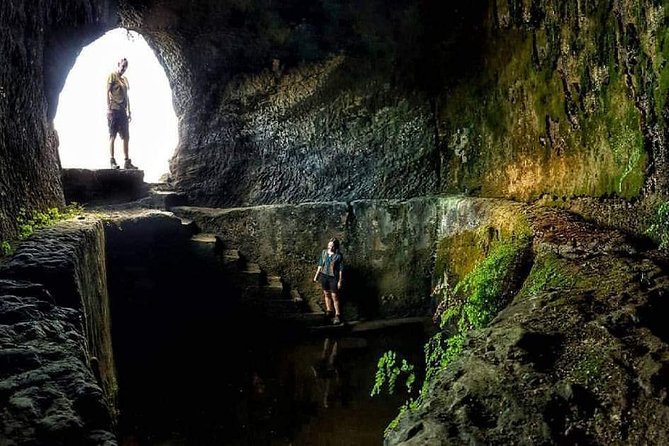
You’ll also visit a Columbarium romano. A columbarium, in the broad sense, is a place connected to interment practices. In other words, it anchors the idea that people kept returning to these meaningful locations, even when centuries changed around them.
This stop helps you avoid a common archaeology mistake: thinking every site belongs to only one era. The point here is layered understanding. You can see how different communities used and interpreted space over time, and how later structures can sit beside older traces.
It is also a good pause for photos and for questions. If you like connecting artifacts and features to human routines, this is a strong moment in the day.
Passagem das bestas (Relheiras do Cabrito) and Cars Ruts Logic
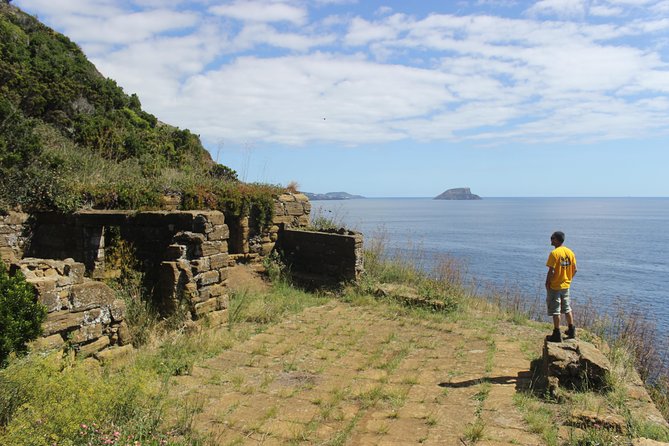
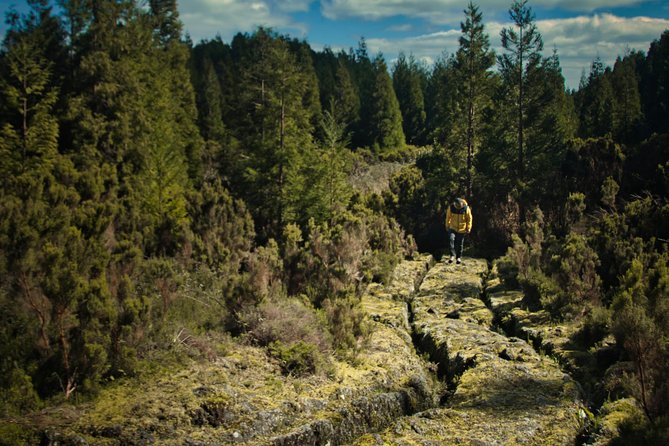
One of the most memorable features on the itinerary is Passagem das bestas, also described as Relheiras do Cabrito. This is where cars ruts come into the story, and the guide turns rock grooves into a practical conversation about use.
The value for you is that you can walk away knowing what you are actually looking at. Instead of treating grooves as a mystery to admire, you learn how the shape can suggest repeated movement and use, which is a huge step toward understanding why the feature exists at all.
If you like field reasoning, this section tends to be a highlight because you are offered evidence and explanation in the same breath. And because you’re outside, you can also see how erosion, slope, and weather affect the rock features.
The Other Stops That Shape the Full Day
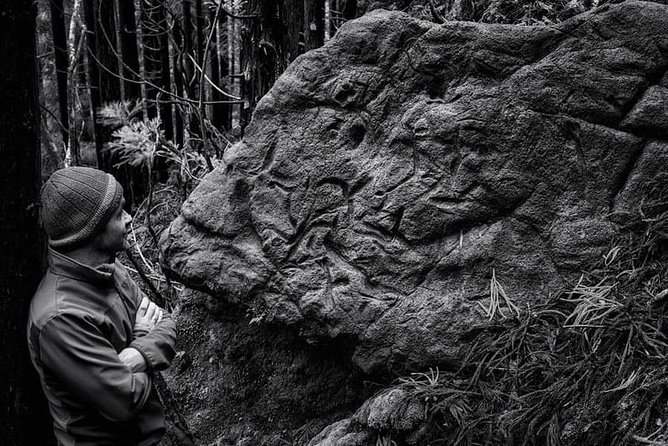
The official plan in the materials highlights the Grota do Medo complex area and the specific archaeological elements above. But a full day on Terceira with this guide often includes additional stops, depending on timing, weather, and how the day is moving.
From what I see built into the tour experience, expect scenic viewpoint breaks and additional archaeology-themed locations beyond the main start stop. You might also see the tour incorporate other island interests that pair well with geology and caves, like sulfur vent areas (Furnas do Enxofre) and off-the-beaten-path natural features.
One important constraint to keep in mind: Algar do Carvão and gruta do Natal are listed as not included. That means if those places show up in your day plan, you should budget for any extra entry costs directly tied to those stops.
This is also where the private format helps. If the ground is wet, the guide can adjust pacing and route. If you want more time at one feature, you can often ask for it.
Walking Notes: Small Hikes, Uneven Ground, and Weather
The tour operates in all weather conditions. That is normal for island hiking, but it changes how you pack.
You should dress for rain or mist and bring shoes you trust on uneven ground. The day involves small hikes, and you may deal with muddy inclines, uneven surfaces, and some sections that can feel physical enough that you’ll want solid footing.
If you have a toddler or a child in your group, plan on slower moments and extra patience. The tour experience has been described as workable for families because the guide can personalize the itinerary and adjust to needs.
Also, children must be accompanied by an adult. That’s the practical rule you should follow when planning who can move around the sites safely.
Food and Timing: Why Meals Matter on a 6 to 9 Hour Day
Food and drinks are not included. That means you should plan either to bring simple snacks or to build a lunch stop into your day. A full day can easily stretch to 9 hours, and you do not want your energy to crash in the middle of a walking segment.
Since the guide is handling your route, you’ll usually have good suggestions for where to eat when timing lines up. The goal is to keep the day archaeology-focused without turning lunch into a frantic detour.
Practical tip: treat this as an active day. Even if you are not hiking hard, you will be walking, stopping often, and standing to observe details.
Why the Guide Style Feels Different: Evidence, Humility, and Questions
What keeps coming up is the guide’s approach. Juca is described as humble, fun to spend time with, and very good at storytelling without turning the day into a lecture you can’t escape.
The key is how he handles uncertainty. You’re shown evidence and reasoning, and you are encouraged to make your own conclusions when something cannot be proven beyond doubt. That matters because archaeology is not always clean and tidy, and Terceira’s pre-colonial story is exactly the kind of subject where questions still matter.
If you love asking why a feature exists or how researchers think about settlement patterns, this tour gives you room for that. If you just want photos, you can still get them, but the day works best when you engage your curiosity.
And yes, the photo element is part of the experience. Having someone who understands where to stand and when to capture the moment can make your photos look more like the day actually felt.
Who This Tour Fits Best
This is a strong fit if you are:
- Interested in pre-colonial Azores history and how interpretations evolve
- The type who likes seeing structures and rock features in place, not just reading about them
- Traveling as a couple, family, or small group who wants privacy and flexibility
- Eager to ask questions in real time and get straight answers about what is certain and what is not
It is less ideal if you:
- Want a fully paved, zero-walking day
- Get impatient with slow observation moments and prefer fast checklists
- Have very limited mobility and would struggle with uneven ground
Quick Price Reality Check: When It Feels Like a Bargain
This price becomes easier to justify when you compare what you would otherwise pay in pieces: a guide plus transport plus entry costs plus the value of having someone read the terrain for you.
Because it is a private tour, you are also paying for time. You are not watching the clock while you’re guided from site to site. A day paced around evidence and observation usually takes longer than the tourist-speed version, and here you are paying for that slower, better experience.
If you are the kind of traveler who wants the story behind the stones, you will feel the value.
Should You Book the Full Day Private Archaeology Tour?
If your idea of a great day in the Azores includes walking to meaningful sites, learning how features get interpreted, and having a guide who is comfortable answering hard questions, I think you should book this. The combination of private transport, Juca’s field-focused explanations, and the specific visit to Grota do Medo, the roman columbarium, and Passagem das bestas is a solid package.
Do it especially if you want a Terceira experience that feels local and investigative, not generic and commercial.
If you’re on the fence because you worry about walking or weather, that’s solvable. Bring proper shoes, dress for rain, and plan for a slow pace where needed. If that sounds workable, this tour can be a highlight of your time on the island.
FAQ
How long is the full day private archaeology tour?
The duration is about 6 to 9 hours.
What time does the tour start and where do pickups happen?
The start time is 9:00 am. Pickup is available from hotels and local accommodations in Angra do Heroísmo (you share details of your place), and from the airport if you provide your flight number and arrival time.
Are tickets included for the main stop?
Admission is included for the Azores Expeditions stop, listed as about 20 minutes.
What is included in the tour price?
Included are a professional guide, a professional photographer guide, hotel pickup and drop-off, a private tour format, and transport by air-conditioned minivan.
What is not included?
Food and drinks are not included, and Algar do Carvão and gruta do Natal are also not included.
Is the tour private, and do children need to be with an adult?
Yes, it is a private tour/activity, meaning only your group participates. Children must be accompanied by an adult.
Just in from around Angra do Heroismo
- Walking tour of Angra do Heroísmo★ 5.0 · 1 review
- Angra do Heroísmo Half Day Walking City Tour with Tasting★ 5.0 · 1 review
- Half Day – Angra do Heroísmo Walking Tour with Tasting★ 5.0 · 3 reviews
- Angra do Heroísmo: A walking tour of the city★ 5.0 · 3 reviews
- Angra do Heroísmo Walking City Tour: Half Day Tour★ 3.5 · 3 reviews
- Angra do Heroísmo by foot★ 5.0 · 4 reviews
Private, compared.

Private Full-Day 4×4 Tour to Lagoa do Fogo & Lagoa das Sete Cidades
Read our review →
PHOTO TOUR (Full Day Private Tour- Sunrise to sunset)
Read our review →
All West, Sete Cidades, Mosteiros, Ferraria – Private Tour
Read our review →
Half Day 4×4 Private tour from Ponta Delgada Azores
Read our review →Browse the lists this tour appears in