Reviewed · GUIDED
Azores Marine Birdwatching Expedition w/ Biologist Guide
Sea birds get up close fast. On Sao Miguel, this small-group marine birdwatching outing has you ride a Zodiac RIB toward known colonies, then push farther out to scan for seabirds at sea. You’ll be out long enough to feel like you left the harbor, but short enough to still enjoy the rest of your day.
I especially love the small group size (max 9). It means the biologist can point things out clearly, and you spend less time craning and more time actually watching. I also like that Opticron 8×42 binoculars are included, along with a waterproof top and life vest, so you are not scrambling for gear at the last second.
One drawback to plan for: you cannot control wildlife. The guide can do everything right, but you still cannot guarantee specific species or a perfect show on a perfect schedule.
In This Review
- Key points before you go
- From Vila Franca do Campo Marina to the First Bird Colonies
- How the Zodiac Ride and VHF Scouting Improve Your Odds
- Spotting at Sea: The Birds You’re Likely to See
- What Stop 1 Teaches You: Islet of Vila Franca do Campo
- Gear, Comfort, and the Real Value of Included Binoculars
- Price and Logistics: Is It Worth About $58.81?
- Who Should Book This Marine Birdwatching Expedition
- The Best Way to Enjoy It Without Stress
- Should You Book This Tour?
- FAQ
- How long is the Azores Marine Birdwatching Expedition?
- What time does the tour start and when should I expect to be back?
- Where is the meeting point?
- Is pickup available?
- What is included, and what should I bring?
- Can the guide guarantee specific birds like a particular species at a particular time?
- What wildlife areas do you visit during the trip?
- Are children allowed and how many people are in the group?
- What happens if weather is poor or if I need to cancel?
Key points before you go
- Small group, max 9 travelers, so you get real attention instead of a crowd
- Binoculars and safety gear included: Opticron 8×42 plus waterproof top and life vest
- Zodiac RIB cruising gives you a close look at Vila Franca do Campo colonies
- Biologist-led scouting with inland lookouts using VHF radio helps you approach carefully
- Wildlife research vibe: the team collects field imagery and data while you watch
From Vila Franca do Campo Marina to the First Bird Colonies
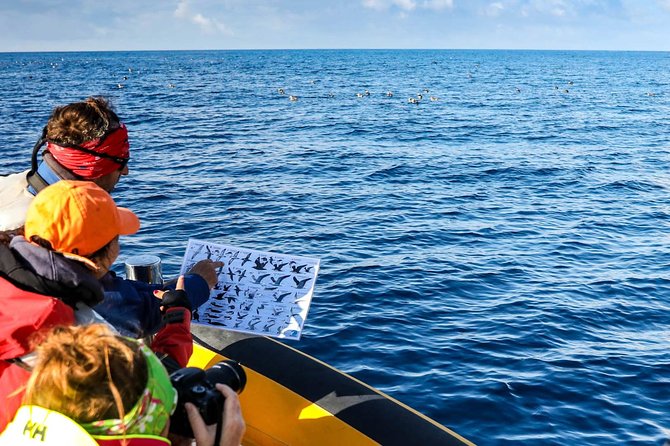
You start at the Azores Whale Watching TERRA AZUL base at the Marina de Vila Franca do Campo. The start time is 8:00 am, and the whole outing runs about 3 hours, typically back by 11:00. It’s an early start, but it works well for birds that are active and visible in the morning.
Before you head out, you get a short briefing. Expect a quick intro to the birds you might see locally, plus onboard safety. That matters more than it sounds, because seabird viewing is a mix of scanning, listening for cues, and reacting fast when something appears at the edge of your binocular view.
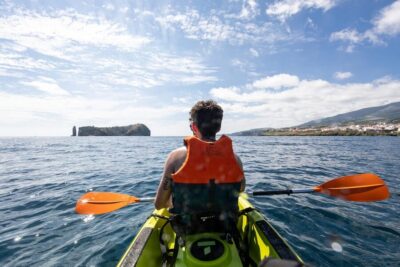
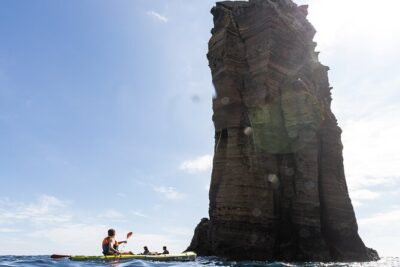
Then you move along the coast with the goal of reaching known breeding and feeding spots. The first key area is the Islet of Vila Franca do Campo. This is where “birdwatching” stops being a vague term and becomes a real target, because colonies and shore activity are concentrated and easier to read.
Islet viewing is also a good moment to get your “bird eyes” working. Early on, you tend to spot the obvious stuff first (tern silhouettes, gulls on the water, birds hopping the shoreline). Once your eyes get used to the scale, the guide’s callouts make more sense, and the smaller seabirds start to stand out.
More on São Miguel:
- From Ponta Delgada: Whale and Dolphin Watching Trip
★ 4.7 · 4,109 reviews - Azores: Whale Watching & Islet Boat Tour w/ Marine Biologist
★ 4.7 · 2,945 reviews - São Miguel West: Full-Day Van Tour with Lunch
★ 4.9 · 1,948 reviews - São Miguel West Full Day Tour with Setes Cidades Including Lunch
★ 5.0 · 1,605 reviews
How the Zodiac Ride and VHF Scouting Improve Your Odds
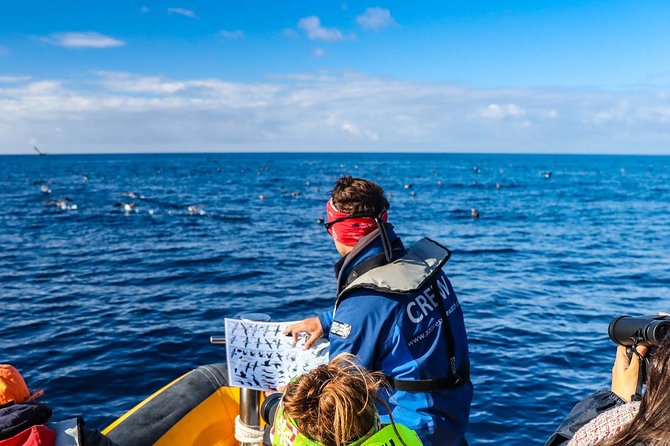
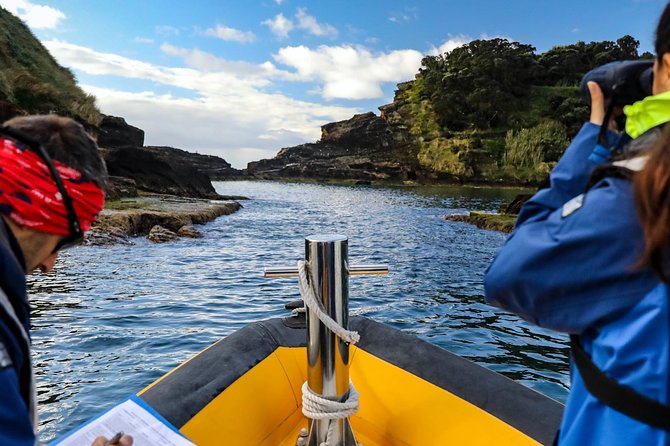
This tour is built around a Zodiac RIB boat that can take up to 9 people. That size is a big deal. A bigger vessel can be comfortable, but it also means less flexibility when you need to approach with care. Here, the boat can get you close enough for binocular viewing without treating wildlife like a roadside attraction.
Out at sea, you’ll notice the team is coordinating like pros. Inland lookouts help guide the boat using VHF radio. The idea is simple: get directions fast, then approach only when the conditions let you do it without spooking birds. The wording you should remember is “undetected distance.” It’s about respectful proximity, not just speed.
Your biologist guide will keep you informed while collecting field imagery and data for research. Even if you are focused on spotting species, you’ll still feel the research rhythm: scanning, verifying, photographing what’s relevant, then adjusting your position.
Here’s a practical side of the process. When you’re riding a fast small boat, your eyes can get lazy. The guide’s job is to keep everyone synced, so you’re not all staring at the same dull patch of water while the action happens somewhere else. Small group size helps a lot, but good guiding is the real multiplier.
Spotting at Sea: The Birds You’re Likely to See
At sea, you are not watching one species at a time. You are reading movement across different zones: near the surface, just beyond the wake, and sometimes out of reach until a bird decides to show itself.
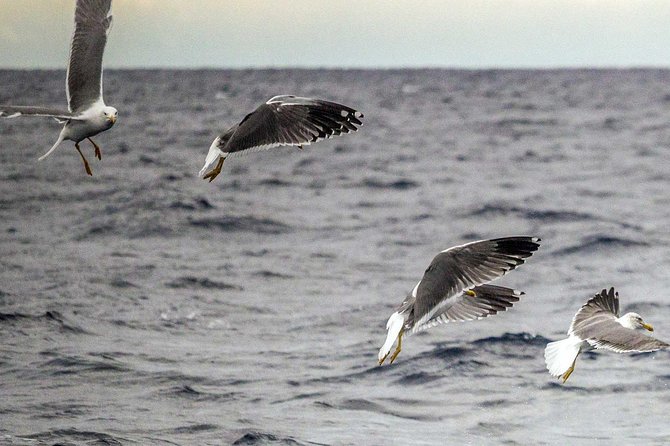
The list of possible sightings is long, and that’s a good sign because it suggests the team isn’t guessing. You might see Cory’s and Barolo Shearwater, along with Common and Roseate Terns, and Yellow-legged Gulls. If the water is right and the wind cooperates, seabirds can appear in short bursts that last only minutes, so your readiness matters.
You might also spot Bulwer’s Petrel, Wilson’s and Madeiran Storm-petrels, and a mix of terns like Bridled and Sooty Terns. Bigger shapes come too, such as Great Shearwater and Northern Gannets.
Some of the smaller, harder-to-pin-down birds are also on the radar, including Leach’s Storm-petrel and Little details like Manx and Sooty Shearwater. There’s also a chance of Arctic birds and Skuas, plus raptors and shoreline birds such as Buzzards, Turnstones, and Sanderlings.
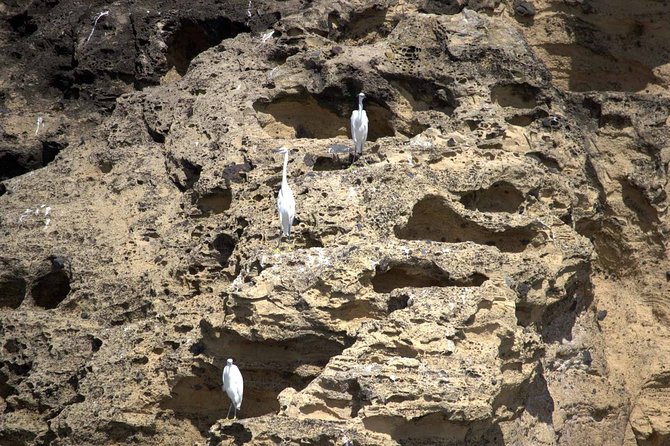
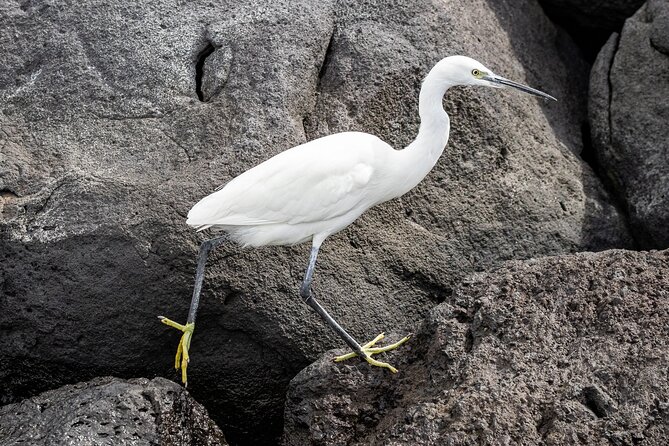
And yes, the tour isn’t only about pelagic birds. You could also see Little Egrets and Whimbrels depending on what the coastline is doing while you’re cruising.
A key reality check: the tour emphasizes that you cannot guarantee animal behavior in the wild, and you cannot guarantee seeing a specific species in a specific timeframe. Use the species list as a guide to what the biologist will be scanning for, not a promise that the sea will follow your itinerary.
What Stop 1 Teaches You: Islet of Vila Franca do Campo
The Islet of Vila Franca do Campo is your first “anchor” location. If you are newer to seabird watching, this stop is where you learn how the birds behave up close, without needing to interpret the entire open ocean at once.
The islet area can help you pick out patterns. For example, some birds stay near the waterline and change position with wind and waves. Others move in wider arcs, only becoming obvious when you track them across the water surface. Seeing colonies in a concentrated area lets you practice fast scanning before you go farther out.
There’s also a psychological benefit. After you’ve watched a few species near the islet, the later open-sea scanning feels less like searching for nothing. You start to recognize silhouettes sooner, and you get better at catching moments when a bird changes direction and becomes easier to identify.
Drawback to keep in mind: this portion is still outdoors and weather dependent. If the sea state is rough or visibility drops, the guide’s plan can shift. That’s normal for wildlife tours, and the best mindset is to judge the experience by how good your guide’s response is when conditions change.
Gear, Comfort, and the Real Value of Included Binoculars
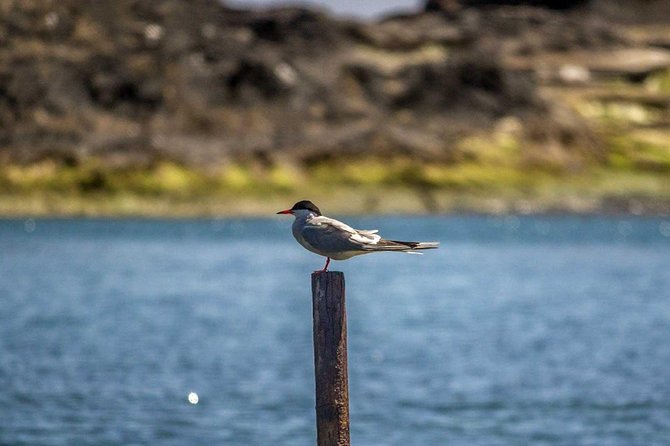
You get a lot for your money here, and it starts with the Opticron 8×42 binoculars. This is a practical choice for marine birding because 8x magnification is strong enough to see detail, but not so strong that you spend the whole time fighting shake. The 42mm objective size helps in real light conditions, which matters early in the morning.
You also get an impermeable top and a life vest. That’s not just safety. It makes your time on the boat feel less stressful. You can dress for warmth without worrying quite as much about sudden spray.
Still, pack like a realist:
- Eat light before you go. You’ll be out on the water, and an empty stomach can turn a short outing into a long one.
- Bring your own personal water supply, even if you travel with a small day bag.
- Bring sunscreen and chapstick. Wind plus sun can be rude on the water.
- Wear warm clothing. This is the Azores, and “warm” in a hoodie way can still mean cool, breezy air at sea.
If you plan to photograph, bring a camera with zoom if you have one. If you don’t, don’t panic. Just protect your gear so it doesn’t become a sea spray science experiment.
Also note: the tour allows most travelers to participate, and service animals are allowed. Children under age 4 are not permitted, and the group stays capped at 9.
More Sao Miguel days with a guide along:
Price and Logistics: Is It Worth About $58.81?
At $58.81 per person for an approximately 3 hour marine birdwatching expedition, the value depends on what you care about most: access, guidance, or gear.
If you care about access, this tour uses a Zodiac RIB and goes to known areas like the Islet of Vila Franca do Campo. That combination is often what separates “we saw birds somewhere” from “we saw colonies clearly.”
If you care about guidance, the key is the biologist-led approach and the team coordination using VHF radio and inland lookouts. That reduces wasted time. Less time searching means more time actually watching.
If you care about gear, the included binoculars are a big part of the deal. You also get safety basics covered with the life vest and waterproof top, plus insurance.
A small logistics note: pickup is offered, but it depends on availability and starts before your designated pickup time. If you want pickup, contact and confirm your exact pickup time.
Finally, this trip is booked fairly ahead. On average, it’s reserved about 21 days in advance. If you’re traveling in a high-demand window, it’s smart to lock it in early.
Who Should Book This Marine Birdwatching Expedition
This is a great fit if you:
- Want a focused morning outing in Sao Miguel rather than a full day tour
- Like wildlife watching with real scientific handling of the day, including research data collection
- Prefer small groups and clear guiding cues
- Are okay with the fact that wildlife is unpredictable, and you’re coming for the experience, not a guarantee
It’s also a good choice for people who want structure. The briefing, the colony stop, then the offshore scanning gives you a clear arc. Even if you are not an expert birder, the guide’s local knowledge helps you connect names to shapes and behavior.
It may be less ideal if you need guaranteed species sightings for a checklist. This tour specifically sets expectations that you cannot guarantee species or animal behavior at a specific time.
The Best Way to Enjoy It Without Stress
You’ll enjoy this most if you show up ready to look hard and stay flexible.
Start with your attitude: you’re going to scan. You’ll likely spot birds in flashes. When something appears, listen for the guide’s cue, then check your binoculars fast and track the movement instead of only looking where the bird was.
Bring the basics that the tour recommends:
eat light, bring water, sunscreen, chapstick, and warm layers. Then add your own comfort essentials. If you tend to feel seasick, bring whatever helps you personally, since sea conditions can vary on the water.
Also, take advantage of the small group setup. If you have questions, this is the kind of tour where questions make sense. The guide can help you learn what you are seeing and why it’s in that area.
Should You Book This Tour?
If you want a morning focused on marine birds, with a small group, included binoculars, and a biologist-led plan that uses scouting to approach carefully, I’d book it. It’s priced like a specialty wildlife activity, but the included gear and research-style guidance make it feel more practical than many tours that ask you to bring everything.
Book it with the right expectations. You are not buying a guaranteed checklist. You are buying a careful, weather-sensitive chance to see Cory’s and Barolo shearwaters, terns, gannets, and more, while the team works hard to find birds and protect the environment.
If you’re flexible on species and you like being on the water early, this is one of those tours that makes Sao Miguel feel like a real place for wildlife, not just a scenic stop.
FAQ
How long is the Azores Marine Birdwatching Expedition?
The tour lasts about 3 hours.
What time does the tour start and when should I expect to be back?
The start time is 8:00 am, and it ends back at the meeting point around 11:00.
Where is the meeting point?
You meet at Azores Whale Watching TERRA AZUL, Marina de Vila Franca do Campo 4, 9680-187 Vila Franca do Campo, Portugal.
Is pickup available?
Pickup is offered, but it is subject to availability. Pickup times start prior to your designated time, so you should confirm your exact pickup schedule.
What is included, and what should I bring?
Binoculars (Opticron 8×42), an impermeable top, and a life vest are included, along with insurance and a wildlife guide plus experienced skipper. Bring your own personal water supply, sunscreen, chapstick, and warm clothing. Camera with zoom and binoculars are recommended, and you should protect personal equipment.
Can the guide guarantee specific birds like a particular species at a particular time?
No. You cannot control animals behavior in the wild, and the tour does not guarantee that you will see a specific species within a specific timeframe.
What wildlife areas do you visit during the trip?
You travel along the coast to observe known colonies at the Islet of Vila Franca do Campo, then head out to sea looking for seabirds and other wildlife.
Are children allowed and how many people are in the group?
No children under age 4 are allowed. The group maximum is 9 travelers.
What happens if weather is poor or if I need to cancel?
The activity requires good weather. If it is canceled due to poor weather, you will be offered a different date or a full refund. If you cancel, free cancellation applies up to 24 hours in advance for a full refund.
Just in from around Sao Miguel
- São Miguel Guided Tour to the Lagoa do Fogo Volcano and Sete Cidades, Azores★ 5.0 · 1 review
- São Miguel Island: Nordeste Natural Park & Waterfalls★ 5.0 · 1 review
- From Ponta Delgada: Nordeste Full Day Jeep Tour★ 5.0 · 1 review
- Private Transfer from Azores (PDL) Airport to Lagoa★ 5.0 · 1 review
- São Miguel Azores: Kayak Rental with Electric Pump & Paddles★ 5.0 · 1 review
- Private Transfer from Azores (PDL) Airport to Vila Franca do Campo★ 5.0 · 1 review
Guided, compared.

Vila Franca Islet: Bioligist Guided 0% Carbon e-Boat Tour
Read our review →
Mount Pico Guided Climb – Summit Portugal’s Highest Peak
Read our review →