
Reviewed · FAIAL ISLAND TOURS
Private full day Faial, life on the island
Faial is small, but it feels like many worlds in one day. This private full-day drive shows you the authentic island rhythm, with a guide who connects the past to what you see now. I love the route’s mix of beaches, volcanic ground, and working farmland, and how the story stays grounded in real life on Faial. One drawback to plan for, though: it’s weather-dependent and runs about 7 to 8 hours, so you’ll be in the car most of the day.
A quick note on the guide: the experience is often led by Andreas Merz (Visitfaial), and he comes across as well spoken, friendly, and attentive, with a knack for turning history into something you can picture. If you hate being outside in cool mist or rain, or if you want long stays at each viewpoint, this may feel a bit fast paced.
In This Review
- Key highlights worth your attention
- A private Faial day that feels local, not just scenic
- Meeting in Horta at 9:00 and getting picked up
- Praia do Almoxarife: black sand and the early settlers’ shoreline
- Salão: clean air and whaling-era ports
- Fajã da Praia do Norte: lava made land in 1672
- Capelinhos: the Azores’ latest terrestrial eruption
- Varadouro and its natural swimming pools
- Feteira: bananas, organic farming, and a subtropical rhythm
- Picnic lunch with a view, and how to make it feel worth it
- Price and value at about $165.61 per person
- Weather, timing, and why Capelinhos is the swing point
- Who this private Faial day is best for
- Should you book this Faial tour?
- FAQ
- How long is the private full-day Faial experience?
- What time does it start, and where do we meet?
- Is pickup available in Faial?
- Is the tour offered in English?
- Is there lunch included?
- What if the weather is bad or I need to cancel?
Key highlights worth your attention
- Private, full-day flow with pickup and drop-off in Faial, so you skip the driving stress
- Capelinhos volcano as a living reminder of active volcanism in the Azores
- Whaling-era insights at Salão, tied to what the island built around the sea
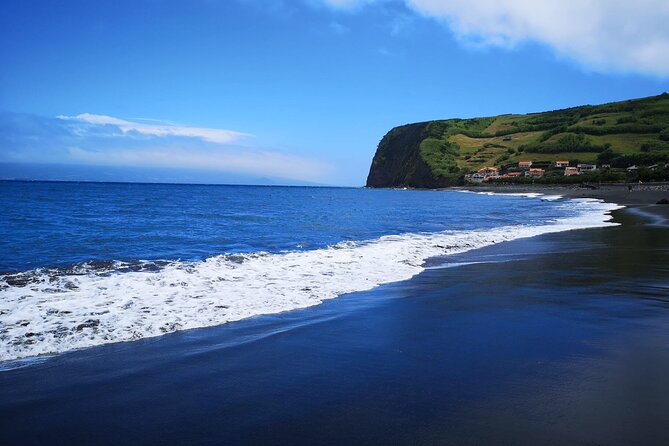
- Black-sand Praia do Almoxarife where the early settlers’ stories still echo
- Picnic lunch with local specialties while you get a view and slow down for a meal
- Farmland and bananas at Feteira, with organic farming and plant cycles explained
A private Faial day that feels local, not just scenic
This is a full-day island drive built for seeing Faial the way residents likely think about it: coastlines, ports, farm edges, and the volcanic shapes underneath it all. Because it’s private, you’re not waiting behind a busload. You move as a group, stop when it makes sense, and get explanations tuned to your questions.
The big win for me is that the day isn’t just a highlight reel. The stops are short, but the guide links them into a single story: how the island’s geology created settlement patterns, how ocean work shaped communities, and how farming fits into a subtropical climate. On a small island like Faial, that kind of context makes the views land harder.
Also, the pace is practical. Each stop is timed around what you need to see and photograph, then you’re back in the car. If you’re the type who gets restless after 45 minutes in a museum, you’ll probably like this format.
More on Faial:
- Horta: University Startup Whale and Dolphin RIB Boat Trip
★ 4.9 · 225 reviews - Faial Island: Full Day Tour – Nature and Local Culture
★ 5.0 · 213 reviews - Faial Island: Half Day Tour
★ 4.8 · 181 reviews - Faial Island: Half Day Tour
★ 5.0 · 99 reviews
Meeting in Horta at 9:00 and getting picked up
The day starts at Praça Infante Dom Henrique, 9900-016 Horta, with a 9:00 am start. You can also arrange pickup and drop-off at a place of your choice in Faial, which matters here. Faial’s main areas are connected, but a private route is easier than trying to stitch together parking, driving, and timing on your own.
You’ll likely begin with a quick orientation from the guide. That small moment is useful because it sets you up to understand what you’re seeing next: lava shapes at the island’s edges, coastal parishes with distinct identities, and the way history shows up in everyday places.
And because you get a mobile ticket, you’re not juggling paper confirmations. It’s the kind of small convenience that helps when you’re traveling on islands.
Praia do Almoxarife: black sand and the early settlers’ shoreline
Your first stop is Praia do Almoxarife, known for its long beach with black sand. Even if the water and sand do most of the talking, the guide’s angle helps you read the place. This parish was among the earliest landing areas for settlers, and that detail changes how you interpret what you see. A beach stops feeling like a postcard and starts feeling like a hinge point in the island’s story.
At about 15 minutes, this isn’t a long beach lounge. It’s enough time to take in the shoreline, notice the contrast between the dark sand and the bright sky, and get your bearings for the rest of the coastline.
Practical tip: wear shoes you can rinse off. Black sand can cling, and you may step on uneven ground. If it’s sunny, it’s a nice early reset before the day starts stacking up views.
Salão: clean air and whaling-era ports
Next comes Salão on the north coast, a parish described as having some of Europe’s cleanest air. That’s not just a romantic idea. On a day that includes volcanic sites and darker sand, a place known for air quality gives you a different kind of sensory break.
Salão also carries one of Faial’s harder-to-sugarcoat chapters: whaling. Until the end of the whaling industry in the 1980s, the small port of Salão was a launching site for the smaller rowing boats used for hunting whales. In other words, this wasn’t far-off history. It was local work, local schedules, local livelihoods.
This stop is also about 15 minutes, so the best move is to slow down enough to take in what the coast gives you. Look at the harbor and the angle of the shoreline. Even without extra time, the whaling context helps you understand why this coastline mattered.
If you prefer only gentle, feel-good stops, note that this one is reflective. Still, it’s an important lens for understanding how Faial’s communities formed.
Fajã da Praia do Norte: lava made land in 1672
Then you head to Praia da Faja at Fajã da Praia do Norte, a quiet headland created by lava from the Cabeço do Fogo volcano eruption in 1672. That date is doing a lot of work here. It’s old enough that nature has had centuries to soften the edges, but recent enough that you can still connect the ground beneath you to living geology.
What you’ll likely notice is the human footprint. This area is described as calm and agricultural, with adegas (traditional wine cellars), old agricultural buildings, summer houses, and small gardens. That combination is the payoff: volcano to farming to seasonal life.
Because the stop is short (about 15 minutes), don’t expect a full walk-through unless you’re able to stroll with the group. Treat it like an observational stop. Pause, look, and let the layers of time show up in front of you.
Consideration: if it’s foggy or windy, this kind of viewpoint stop can feel colder than you expect. Bring a light layer even in warmer months.
More Faial Island days out from morning on:



Capelinhos: the Azores’ latest terrestrial eruption
At the western tip of Faial is Capelinhos, a place you visit for a simple reason: it explains how active volcanism shapes daily life. Capelinhos is described as a living witness of ongoing volcanic activity in the Azores, created by an eruption that lasted from September 1957 until October 1958.
That time window matters. It’s not ancient history. It’s within living memory for locals and within modern historical record for anyone studying the Azores. It’s also stated as the latest terrestrial eruption in the Azores, which makes it a kind of reference point for what the region can do.
You’ll spend around 30 minutes here, which feels right. Volcanic sites need some time to absorb. Even without long explanations, you’ll probably find yourself re-looking at the ground textures, the coastline shape, and how the eruption area interacts with the ocean.
Practical note: if weather is poor, this is exactly where visibility can affect your experience. This is one of the reasons the tour asks for good weather.
Varadouro and its natural swimming pools
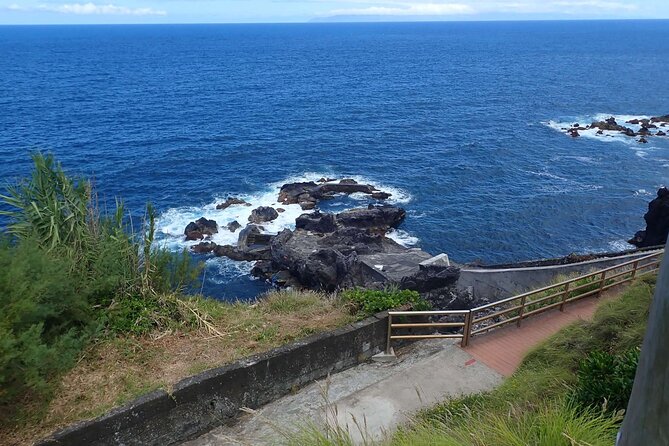
Next is Varadouro, a small coastal resort. In earlier days, it was a summer area for wealthy families from Horta, which gives the area a specific historical vibe: leisure on the coast, outside the city’s daily rhythm. Today, it’s more residential, but there are still signs of how people used to use this coastline.
Varadouro is also known for popular natural swimming pools. If you’re traveling in warmer season, this might be the most tempting stop to linger. Even if you don’t go in, it helps to stand near the water and understand how the rock and tides create places to swim.
This is a 15-minute stop, so you’ll need to be intentional with your time. If you want photos, pick your spots quickly. If you want a feel for the swimming pools, give yourself a couple of minutes to watch how the water behaves.
If the conditions are rough, swimming won’t be the priority, and that’s fine. The point here is the coastal living pattern.
Feteira: bananas, organic farming, and a subtropical rhythm
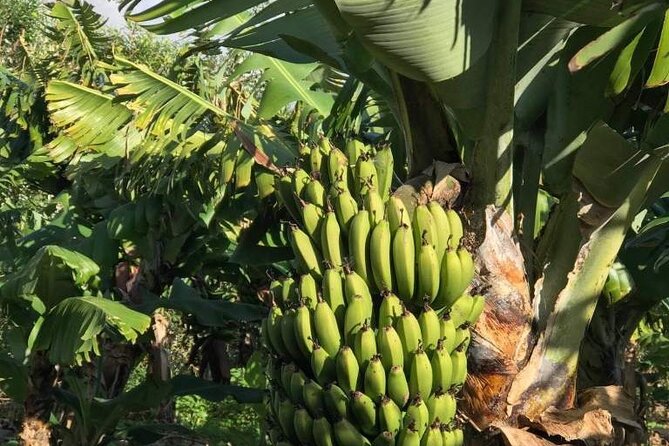
The day also slows slightly on the south side at Feteira, where Faial’s subtropical climate shows up in banana plantations. This stop is less about dramatic geology and more about how people farm with the island’s conditions.
The guide will help you learn the cycle of banana plants and talk about organic farming. Even if you’re not a farming person, this kind of explanation changes how you see the land. It turns a plantation from a view into a system: growth stages, timing, and care methods.
You’ll likely spend about 30 minutes, which is better suited to this kind of learning. Plant cycles and farming practices need a bit more back-and-forth than a quick photo stop.
Practical tip: if you enjoy learning, ask how organic farming is practiced locally. The guide’s job is to connect theory to what you see around you, and Feteira is the place where those connections are easiest to spot.
Picnic lunch with a view, and how to make it feel worth it
A key part of this day is a picnic lunch with local specialties. The highlights promise that you’ll sample island food, and that’s more meaningful than just having something to eat. A picnic also breaks the car time. It gives your brain a reset and gives the route a natural midpoint.
I like picnic lunches on islands because the food comes with context. You’re eating where the day’s story is unfolding, not in a separate building that could be anywhere. Even if the menu details aren’t the same from day to day, the intention is clear: local tastes, island views, and a chance to slow down.
To make the most of it:
- Bring a light layer, even at midday, since sea air can make it feel cooler.
- Take two minutes before eating to scan the view. You’ll often see why that stop mattered once you’re not rushing.
Price and value at about $165.61 per person
At $165.61 per person, this is not a budget “hop on and off” tour. But for a private full-day experience, it can be a solid value if you compare what you actually get.
You’re paying for:
- A full day of guided driving across Faial
- Pickup and drop-off within the island
- English explanations
- A picnic lunch with local specialties
- Multiple stops that are marked as free admission in the schedule
Free admission doesn’t mean you should ignore the cost. It means you’re not paying extra at each stop on top of the tour price. The main cost is the guide time and transportation, and that’s the part you can feel in your day.
This tour tends to make the most sense when you want context and you don’t want to drive yourself. If you’re the type who likes planning every minute, you might feel like you could do it cheaper on your own. But if you’d rather spend your energy on experiencing Faial, this private format is a time-saver.
Weather, timing, and why Capelinhos is the swing point
This experience notes a weather requirement. If conditions are poor, it may be canceled, and you’ll be offered a different date or a full refund. That’s exactly what you want to hear for a day built around ocean views and volcanic ground.
The day also has a structure of short stops, mostly 15 minutes, with Capelinhos and Feteira at around 30 minutes. That means you won’t feel stranded at one location too long, but you also won’t feel like you have hours at each sight.
So decide what you value most:
- If you want lots of different places and explanations in one day, this works well.
- If you want slow, deep time at one beach or one lookout, you may feel rushed.
Who this private Faial day is best for
This is a great fit if you:
- Want a guided island story rather than a self-driven checklist
- Prefer a private experience with only your group
- Like history that connects to what you see now, including whaling-era connections
- Enjoy short stops that keep the day moving
If you’re someone who hates driving, or you just don’t want to deal with navigation and parking, pickup and drop-off help a lot. And if you’re traveling with service animals, note that service animals are allowed.
Should you book this Faial tour?
I’d book it if you want one day to cover Faial’s main themes: coastlines, volcanic evidence at Capelinhos, whaling connections at Salão, and everyday life through farming at Feteira. The private format and the English guiding make it easier to ask questions and understand what you’re looking at, especially with a guide like Andreas Merz who’s described as fun and professional and who brings historical perspective into the present.
I’d skip it if your ideal day is long, slow beach time with zero schedules, or if you know your schedule cannot flex around weather.
If you want a smart, guided full-day loop that turns scenery into meaning, this is a very practical way to do Faial.
FAQ
How long is the private full-day Faial experience?
It runs about 7 to 8 hours.
What time does it start, and where do we meet?
The start time is 9:00 am, and the meeting point is Praça Infante Dom Henrique, 9900-016 Horta, Portugal. The tour ends back at the meeting point.
Is pickup available in Faial?
Yes. Pickup and drop-off are offered at a place of your choice in Faial.
Is the tour offered in English?
Yes, the experience is offered in English.
Is there lunch included?
Yes. You’ll sample local specialties over a picnic lunch with a view during the day.
What if the weather is bad or I need to cancel?
The experience requires good weather, and if it’s canceled due to poor weather you’ll be offered a different date or a full refund. You can also cancel for free up to 24 hours in advance for a full refund.
Just in from around Faial Island
- Faial Island: Half Day Premium Tour (for groups up to 8 people)★ 5.0 · 1 review
- Private hike along the Levada★ 5.0 · 1 review
- Azores Sailing Yacht Charter and Liveaboard Expeditions★ 5.0 · 1 review
- Customizable Full Day Private Tour of Faial★ 5.0 · 2 reviews
- Private Half-Day Hike around the Caldeira★ 5.0 · 2 reviews
- Exploring Faial Full Day 4WD Tour★ 5.0 · 3 reviews
Faial Island Tours, compared.
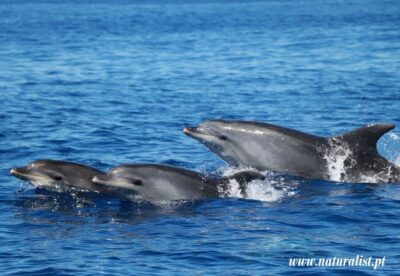
University Startup Whale and Dolphin RIB Boat Trip
Read our review →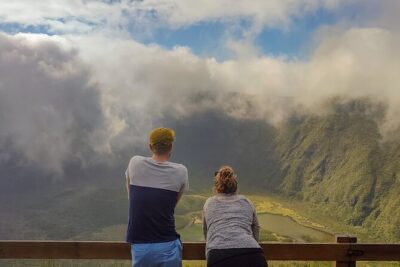


PICO Whale Watching – Madalena – Join our Research Team
Read our review →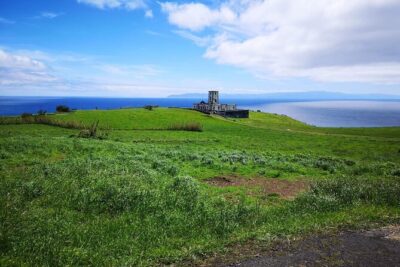


Browse the lists this tour appears in