
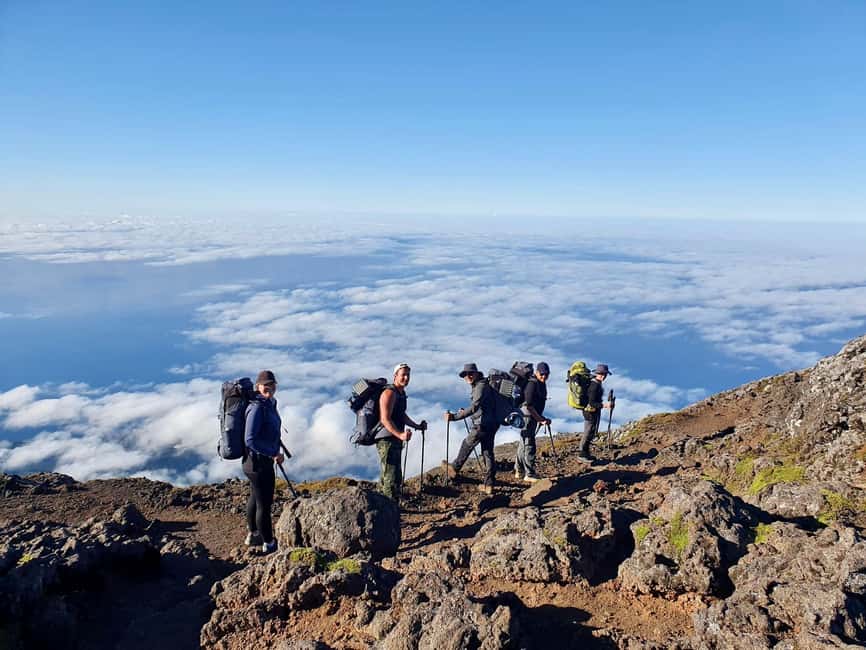
Reviewed · MOUNT PICO CLIMBS
Pico Mountain Climb: Your Path to Portugal’s Highest Point
One mountain, two big tests: legs and balance. This climb to Pico tops out at 2351 m with a Certified Pico Mountain Guide, and the payoff is a full view of the island world around you, taught with real talk about Pico’s geology and native vegetation. Guides like Steffi and Nilton set the pace, keep you moving safely, and help you read the terrain, especially on the steep bits and that last hand-assisted section. The catch? The descent is often the toughest part, hard on knees and thighs, and weather can turn the last stretch slippery fast.
What I really like is the focus on safety and smart pacing, not bravado. You start with a briefing, you climb through changing ground surfaces, and you get tips for where to place your feet when the path gets narrow and rocky. If you are not in good shape for sustained uphill effort, or if heights make you tense, this will feel like a real mountain, not a simple walk.
In This Review
- Key highlights you should care about
- Entering Mount Pico: Portugal’s Highest Point in the Azores
- Mountain House Start: Safety Briefing and the Real Gear Rules
- Into the Natural Reserve: The Climb Through Vegetation and Geology
- The Crater-to-Summit Transition: When the Mountain Gets Steep
- Piquinho Summit: Big Views, Hand-Off Relief, and a Breather
- The Descent Reality Check: Knees, Thighs, and a Guide’s Foot-Finding Tips
- What You Learn About Pico: Native Plants and Volcanic Structures
- Price and Value: Why a Certified Guide Matters Here
- Who This Climb Suits Best (and Who Should Skip It)
- Packing for Pico: The Azores Can Switch Fast
- Planning Your Day Around the 8 Hours on Mountain Time
- Should You Book the Pico Mountain Climb?
- FAQ
- How long does the Pico Mountain Climb take?
- What height do you reach on the climb?
- Is a guide included, and are they certified?
- Are hiking poles included?
- What languages are available for the guide?
- What footwear is required?
- Is the tour dependent on the weather?
Key highlights you should care about
- Certified guidance for a true mountain ascent, led by experts such as Steffi and Nilton
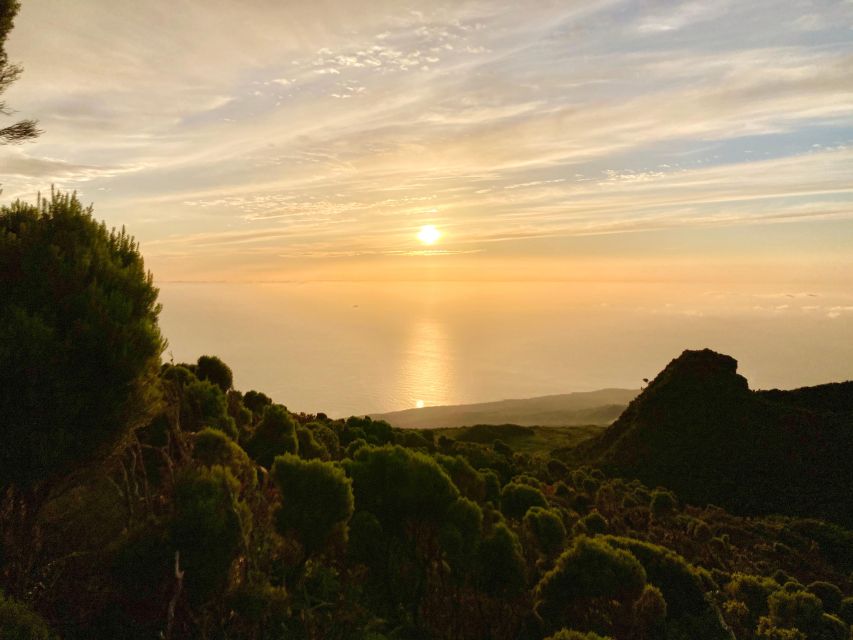
- 2351 m summit views, with a chance to see the central islands depending on the weather
- Mixed terrain all day long, from mud and solid rock to loose rock and sand
- The last 15 minutes use your hands (for stability on steeper ground)
- A descent built for the experienced legs, where technique matters more than speed
Entering Mount Pico: Portugal’s Highest Point in the Azores
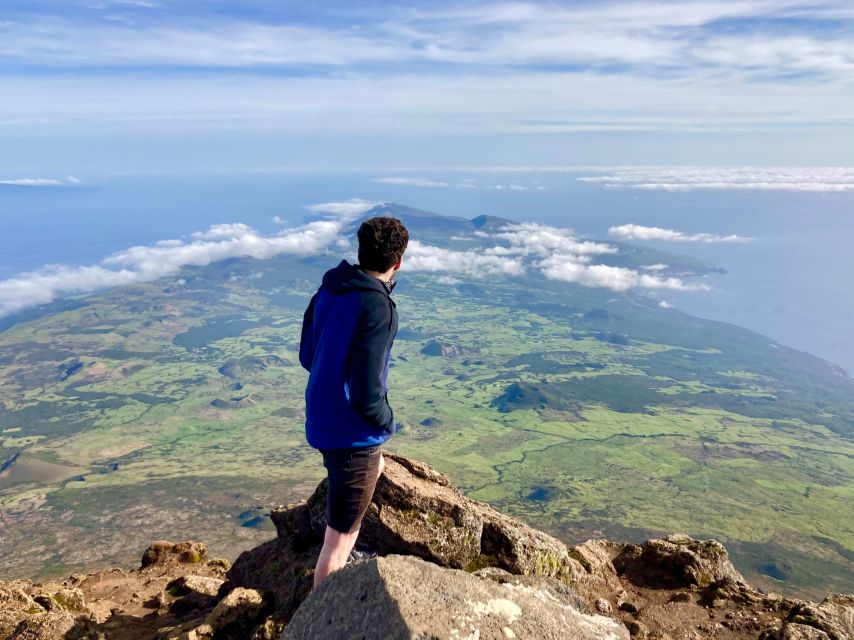
Mount Pico is the kind of place where the Azores feel less like a postcard and more like a living landscape of stone, wind, and hard-earned views. Pico sits in the Mount Pico Natural Reserve, and that setting matters because you are hiking on protected, geologically shaped ground. This is not a groomed trail experience. The route works you physically and mentally, with changing surfaces and steep sections that test your balance.
I love that the climb blends effort with understanding. Your guide walks you through what you are seeing, including native vegetation and the mountain’s geological structures. That turns the hike from just getting up there into something you can actually connect to. Even the way the route is described, with different terrain types like mud, solid rock, and loose rock and sand, tells you why a guide is a big deal here.
The promise you can plan around is simple: you work up about 1100 m of ascent, reach a maximum height of 2351 m, then you drop about 1100 m back down. Duration is 8 hours, so it is a full chunk of your day, not a quick activity you can tack on between errands.
Other ways up Mount Pico:
- Pico Mountain: Climb the Highest Point of Portugal 2351m
★ 5.0 · 187 reviews - Mount Pico Guided Climb – Summit Portugal’s Highest Peak
★ 5.0 · 172 reviews - Pico Mountain Climb: Portugal’s Highest Point – 2351 meters
★ 4.9 · 161 reviews - Mount Pico Night Climb – Reach the Summit for a Magical Sunrise
★ 5.0 · 111 reviews
Mountain House Start: Safety Briefing and the Real Gear Rules
The experience begins at the Mountain House, where your guide is there inside to meet you. Before you move, you get a safety briefing that lasts about 20 minutes. This is where the tone is set. You are not just being herded onto a path. You get practical guidance for a hike that involves steep slopes, rocky ground, and a summit push that is hands-on.
The gear rules are not optional. You must wear hiking boots or hiking shoes with a good grip on the sole. This matters because the natural park can refuse access to the reserve if your footwear is wrong. So if you show up in worn sneakers or low-traction shoes, you might lose the day before it begins.
What I find smart is that hiking poles are included. They are not just a comfort item. On this kind of terrain, poles can help you stay stable on uneven ground and manage effort on the steep sections. You also get access to Mount Pico Natural Reserve (so you are not scrambling for tickets on the spot).
One more practical note: sports shoes are not allowed, but you do get insurance coverage with Allianz® Personal Accident Insurance. That does not make a mountain harmless, but it does mean you are not totally on your own if something goes wrong.
Into the Natural Reserve: The Climb Through Vegetation and Geology
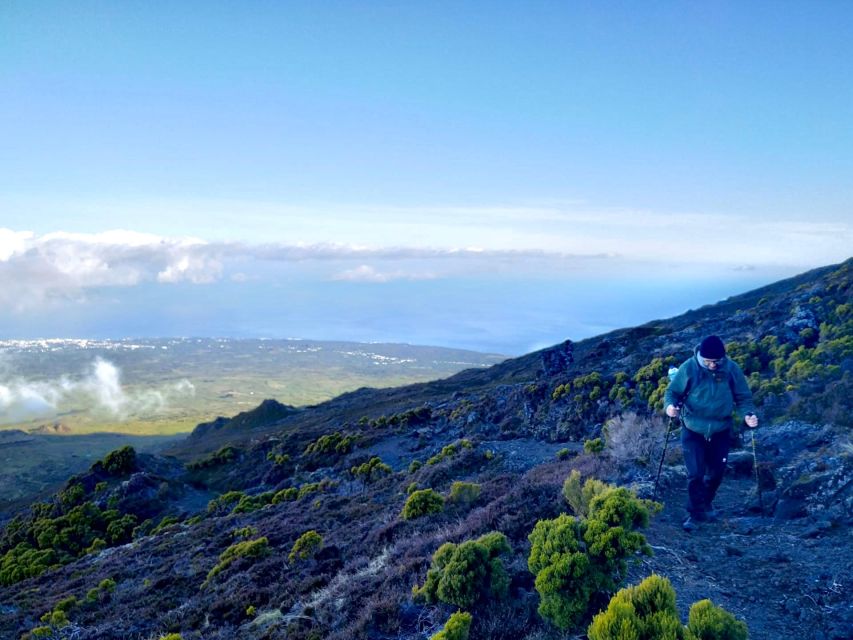
Once you start the hike, you go into Mount Pico Natural Reserve and settle into a route that changes character. The early part is a strong indication for what comes later. If you struggle in the first sections, the guide may advise you to stop for the safety of you and the group. That might sound intense, but it is the kind of reality check that keeps an activity from turning into chaos.
You climb through lush native vegetation and then move into major geological structures. In plain terms: you are walking across ground shaped by Pico’s volcanic story, and the guide helps you notice it. Expect stops or short explanations about what you are seeing in the vegetation and how the terrain is formed.
Then comes the part that keeps things honest. The climb to the crater takes about 3 hours, and that window includes different terrain types:
- mud
- solid rock
- loose rock and sand
That mix changes how you step. Mud asks for traction and careful foot placement. Loose rock means you slow down and scan for stable footing. Solid rock is not automatically easy, but it usually gives you more confidence underfoot. With a guide, you get help choosing the best line through each type.
Physical fitness is required as the terrain turns into a steeper slope. If you are relatively new to uphill hill walking, treat this as a workout day, not a casual stroll.
The Crater-to-Summit Transition: When the Mountain Gets Steep
The route really “turns up the heat” between the crater section and the final push. You start moving from one type of ground into another, and your balance becomes more important than your speed. Good coordination helps here, because you are often stepping across uneven surfaces instead of following a smooth trail.
This is also where you feel the climb’s technical side. The activity’s difficulty levels list physical effort at 3 (difficult) and technical difficulty around 2.5 (medium to difficult). That lines up with the day’s rhythm: you can be strong enough for the uphill, yet still find the footing requires focus.
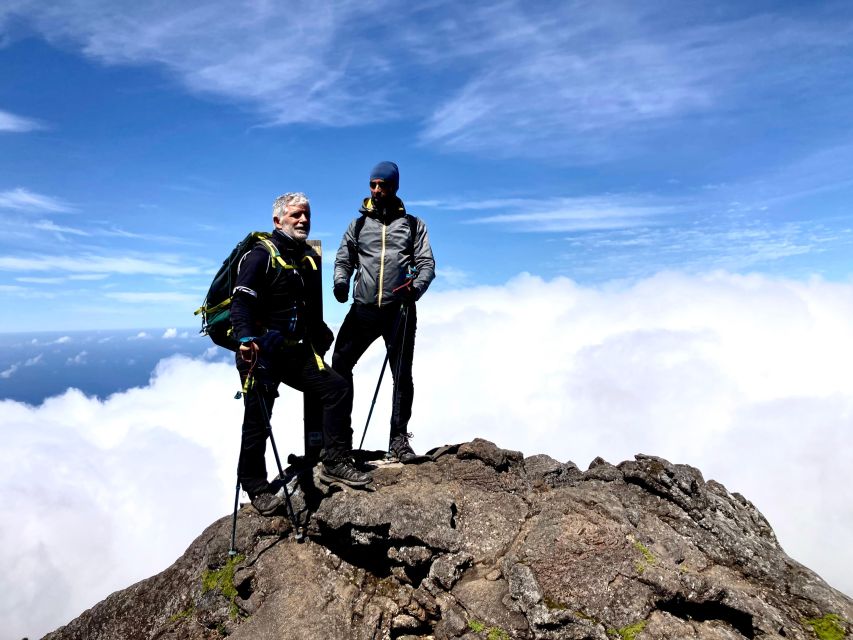
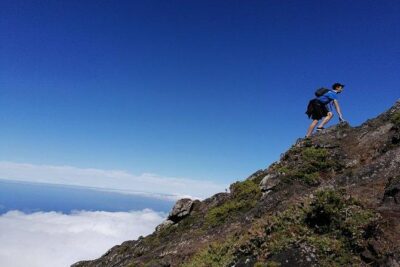
The last part is steep enough that the hike is not purely “legs only.” The final 15 minutes to the top (Piquinho) require using your hands for more stability. You do not need to be a climber, but you do need to stay calm and confident when the ground gets steep. If you are afraid of heights, that section can be mentally tough, not just physically tough.
Piquinho Summit: Big Views, Hand-Off Relief, and a Breather
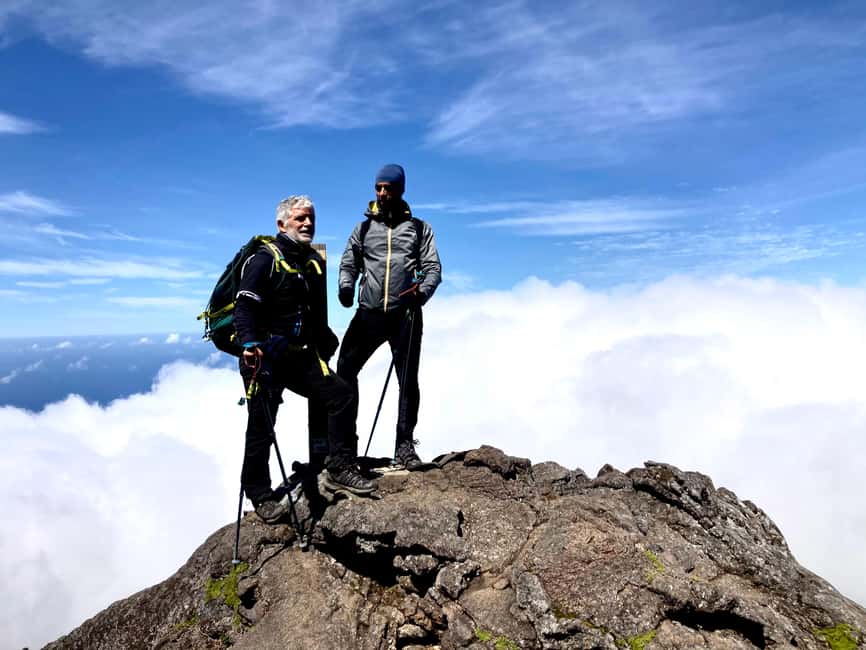
Reaching Piquinho is the moment your effort turns into perspective. The summit is at 2351 m, and you can feel the immensity of being up so high on Pico. Depending on weather, it is possible to see all the islands of the central group. If the day is cloudy, you still get something from the climb, but the view range may be reduced.
This is also when guides make the top feel like an experience, not a stop-and-go checkpoint. In practice, guides have offered hot tea and homemade brownies during the break at the top. I like that touch because it turns the summit into a moment of recovery, and it also reminds you that the goal is not just distance climbed, it is what you take in before you head back down.
At the summit you get time for a final impression, then the descent starts. Expect the emotional shift from excitement to concentration. That switch matters because the descent is where many people feel the hike most.
More on Pico:

The Descent Reality Check: Knees, Thighs, and a Guide’s Foot-Finding Tips
If you want a clear warning, here it is: the hardest part is often the descent. The descent takes about 3-4 hours, follows the same path as the ascent, and can be difficult for inexperienced hikers. Even strong hikers often feel it in the knees and the thigh muscles.
The route can be narrow, steep, and rocky. That combination makes moving tricky, especially when surfaces are uneven or loose. One of the most practical values of a guide is line selection. Guides help you avoid unnecessary trouble spots, and they teach how to handle the terrain better when your legs start to complain.
A calm pace helps. Multiple participants describe the climb as broken into chunks, which means you get short rests and checkpoints instead of pushing nonstop. That pacing approach is not just about comfort. It helps you keep your legs responsive for the downhill work.
When you plan your day, do not assume that coming down is just “the easy part.” You need fresh legs, steady footing, and patience. If you go too fast, the mountain makes you pay for it in muscle soreness and wobbling steps.
What You Learn About Pico: Native Plants and Volcanic Structures
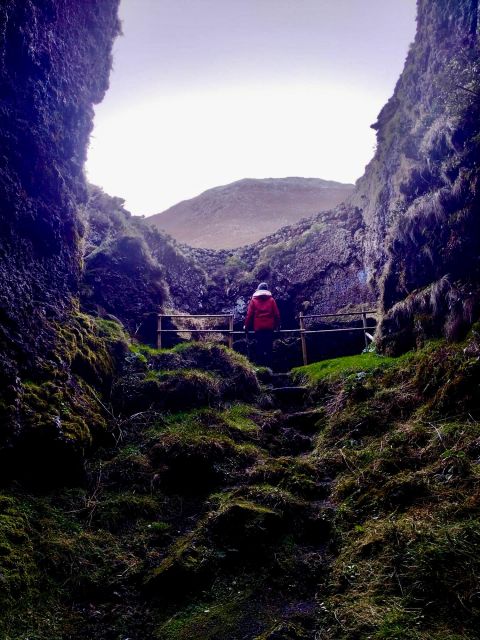
This hike is more than a workout. Your guide explains the mountain and the island, including flora and geology. That is what makes the time on Pico feel earned.
I like that learning happens while you are moving, not in a lecture hall. You get context for why the terrain looks the way it does, and you notice native vegetation in a way you might not if you were climbing solo. You also understand the mountain’s “logic,” which helps you on the climb and especially on the descent.
This is also where safety and knowledge meet. If the guide sees you struggling early, they can advise you to stop for safety. That is not being dramatic. It is a way to keep the hike aligned with real-world conditions: fatigue, weather, and footing all change through the day.
Price and Value: Why a Certified Guide Matters Here
The price is listed at $100 per person. That is not the bargain end of the spectrum. But you are buying several concrete things that matter for a summit hike:
- a Certified Pico Mountain Guide
- access to the Mount Pico Natural Reserve
- hiking poles
- Allianz® Personal Accident Insurance
- a certificate of completion
On Pico, the “value” is not only the climb itself. It is also what the guide prevents: wrong footing, wasted effort, and avoidable slips on steep, rocky, narrow sections. People can underestimate how demanding a descent feels until their knees are asking for mercy.
I think the best way to judge value is to compare two options in your head. If you are comfortable with steep, rocky terrain and you understand how to pick stable steps, you might feel okay going without a guide. If you are not, then the guide is not a luxury. It is the difference between finishing with confidence and finishing with regret.
Who This Climb Suits Best (and Who Should Skip It)
This is not a casual hike. It is not just “difficult” in the abstract. It is hard on the body, and it has moments that require hands for stability.
Good-fit hikers are those with:
- good physical preparation
- comfort with uneven surfaces and steep slopes
- willingness to slow down and focus on safe steps
- decent balance and coordination
It is not suitable for:
- children under 12
- people with back problems
- people with heart problems
- people afraid of heights
- people with respiratory issues
- people with recent surgeries
- people with low level of fitness
- people over 70
- pregnant women
If any of those apply, you should treat that as a hard stop. Pico is not the place to “try to see how it goes.”
Also remember: this activity is weather-dependent and can be cancelled just before it starts. If you are on a tight schedule, build in flexibility.
Packing for Pico: The Azores Can Switch Fast
Pico weather can change, and this hike happens across steep, exposed, rocky ground. Bring what lets you stay dry and stable.
You’ll want:
- sunscreen
- daypack
- hiking shoes (good grip is mandatory)
- weather-appropriate clothing
- food
- rain gear
- sunglasses
- water
Rain gear is not optional thinking. One participant described getting drenched in heavy rainfall during the last stretch of the hike, even late into the day. That is exactly why you should dress for wet conditions even if the morning looks fine.
Also, water and food matter because the hike lasts about 8 hours and includes real uphill work, then a long descent. Don’t show up trusting that you will be able to manage with snacks alone.
Planning Your Day Around the 8 Hours on Mountain Time
This experience is built around one main loop: start at Mountain House, climb through the reserve, and return to Mountain House at the end. The key time pieces are:
- meeting and safety briefing (about 20 minutes)
- about 8 hours total
- roughly 3 hours to reach the crater
- about 3-4 hours for descent
Because the climb is steep and the descent is long, timing affects your success more than people expect. If you plan to rush breakfast, skip hydration, or cut it close on transport, you increase stress when you are already balancing on loose rock.
One more logistical detail that helps your day: when booking, you provide your name, date of birth, and nationality so the mountain house can reserve your place due to a daily limit on the number of climbers.
Should You Book the Pico Mountain Climb?
Book it if you want a real summit challenge with a guide who knows how to manage steep rocky terrain. This is a strong choice for hikers who are fit enough to handle an 1100 m ascent, steady enough for the hands-assisted final 15 minutes, and patient enough to take the 3-4 hour descent seriously.
Skip it if you are not prepared for steep, uneven ground, if your knees do not like downhill work, or if you have any of the listed health or fitness limitations. Also pass if you have a deep fear of heights. Pico will not negotiate.
If you do book, my best advice is simple: show up in proper hiking shoes, bring rain gear, and treat the descent like the main event. You will still get the views, the nature, and the satisfaction of reaching Piquinho, but only if you plan for the whole mountain day, not just the summit moment.
FAQ
How long does the Pico Mountain Climb take?
The total duration is about 8 hours, including the safety briefing and the full ascent and descent.
What height do you reach on the climb?
The maximum height is 2351 m at the summit (Piquinho). The minimum height on the route is 1250 m.
Is a guide included, and are they certified?
Yes. You climb with a Certified Pico Mountain Guide, and the tour provides a live guide during the activity.
Are hiking poles included?
Yes. Hiking poles are included with the activity.
What languages are available for the guide?
The live tour guide is available in English, Dutch, and Portuguese.
What footwear is required?
You must wear hiking boots or hiking shoes with a good grip on the sole. Sports shoes are not allowed, and the natural park may refuse access if footwear is not appropriate.
Is the tour dependent on the weather?
Yes. The activity is weather-dependent and can be cancelled just before the activity starts.
Just in from around Pico Island
- Pico Wine Tour: Get to know Pico’s wines★ 5.0 · 1 review
- Pico: Dune buggy adventure★ 5.0 · 1 review
- 3H Buggy tour of Pico Island vineyards★ 5.0 · 2 reviews
- Luxury Wine Tasting at the Czar Pico Winery★ 5.0 · 2 reviews
- Pico Mountain – Group> 4★ 4.5 · 3 reviews
- Pico island: highlights, wine tasting and local gastronomy★ 4.6 · 3 reviews
Mount Pico Climbs, compared.
Pico Mountain: Climb the Highest Point of Portugal 2351m
Read our review →
Mount Pico Guided Climb – Summit Portugal’s Highest Peak
Read our review →
Pico Mountain Climb: Portugal’s Highest Point – 2351 meters
Read our review →
Mount Pico Night Climb – Reach the Summit for a Magical Sunrise
Read our review →
Pico Mountain Climbing private tour – with round trip from Faial
Read our review →
Browse the lists this tour appears in